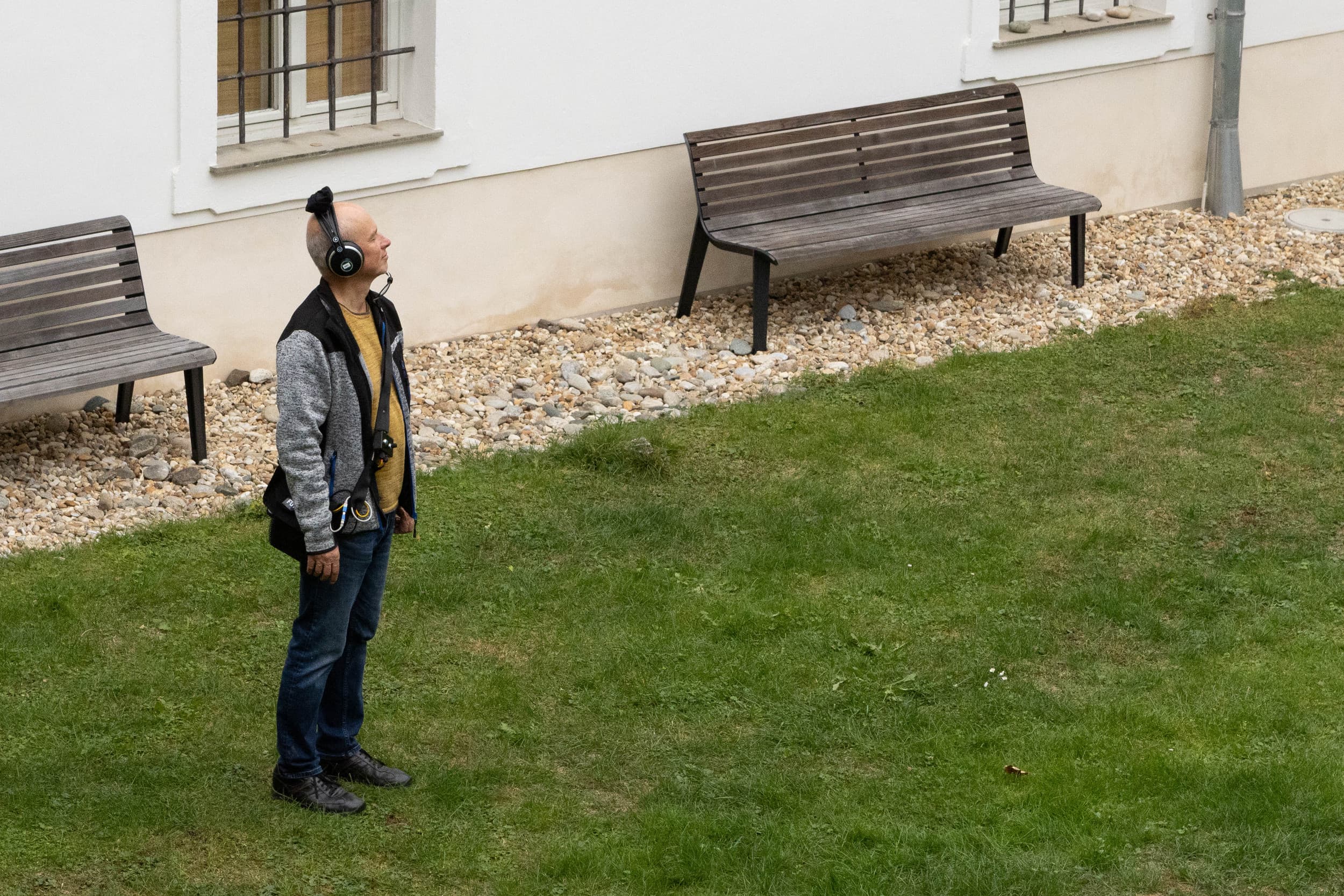

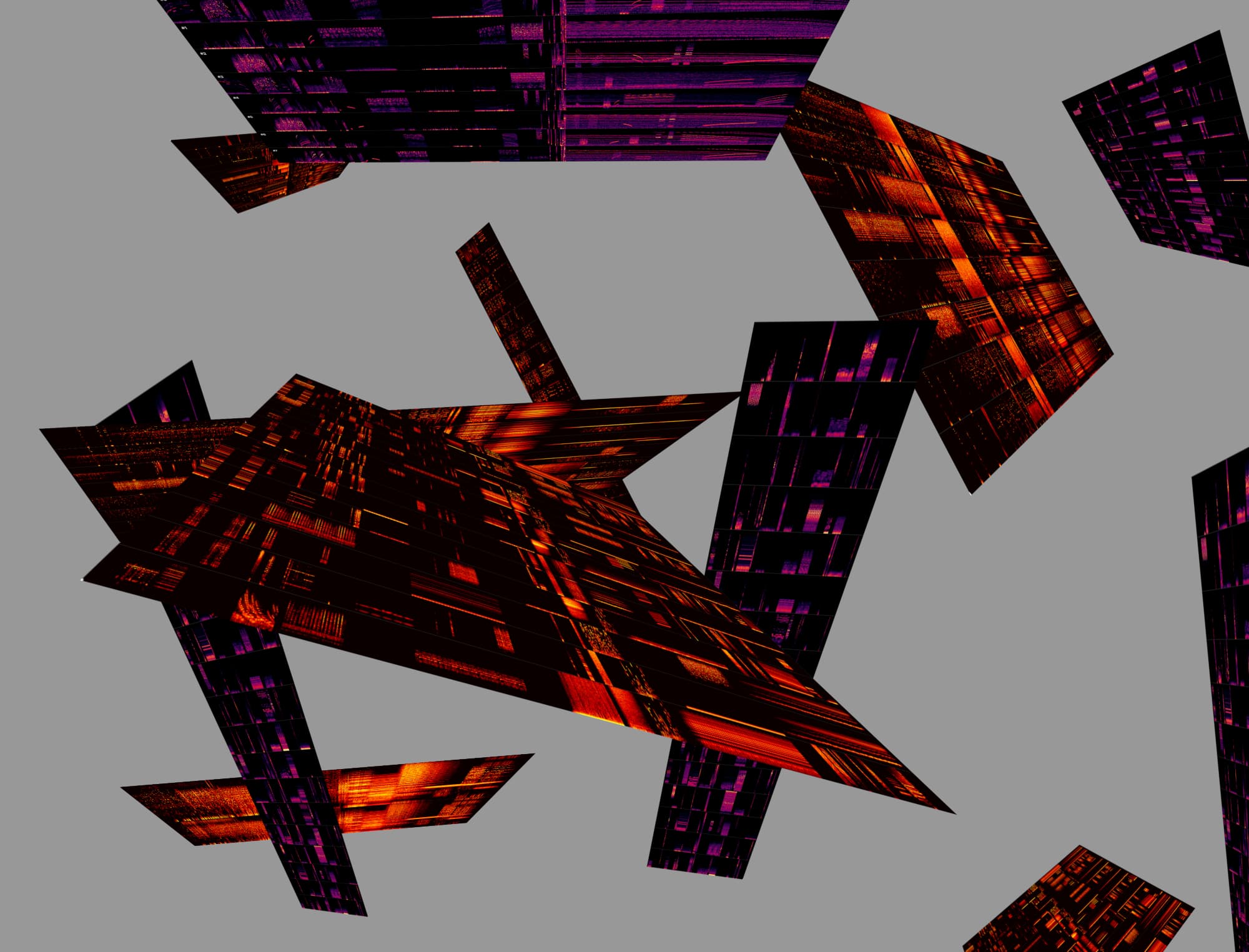
The term multichannel diffusion is imprecise in terms of the possibilities and choices it implies. For x,y vs x,y,z devices have little in common, both in terms of the composition of the work and its listening. In the first case, it's a question of 2D measurements/distances, and therefore of linear thinking and listening; in the second case, it's a question of 3D measurements/distances, and therefore of volumetric thinking and listening.
Historically, multichannel was first developed linearly: quadraphonic, octophonic and so on. Research then continued into volumetric spaces: cube, dome, etc.
3D Audio - Multichannel Diffusion - Acousmatic Music - Composition
The 3rd age[1] of this process - more volumetric than ever - is moving towards the design of so-called “primary forest” spaces, as opposed to Ambisonics and Atmos formats[2] because fortunately the space of our lives is infinitely more vast and much less standardized. Sound formations and vibrations in air/space deserve much better than these extremely restrictive reductions in the circulation and location of spatial sound masses.
Volumiphonic works are distributed through systems such as the CRANE laboratory.

© CRANElab
CRANE lab's 32.2 volumiphonic device in 3D.

© CRANElab
CRANElab, 21140 Millery- France, coordination: Jean VOGUET, 32.2 system
Currently there are several others in the inDREAM is an international network of individuals, independent venues and organizations committed to indexing and building a program for the distribution of multichannel works.
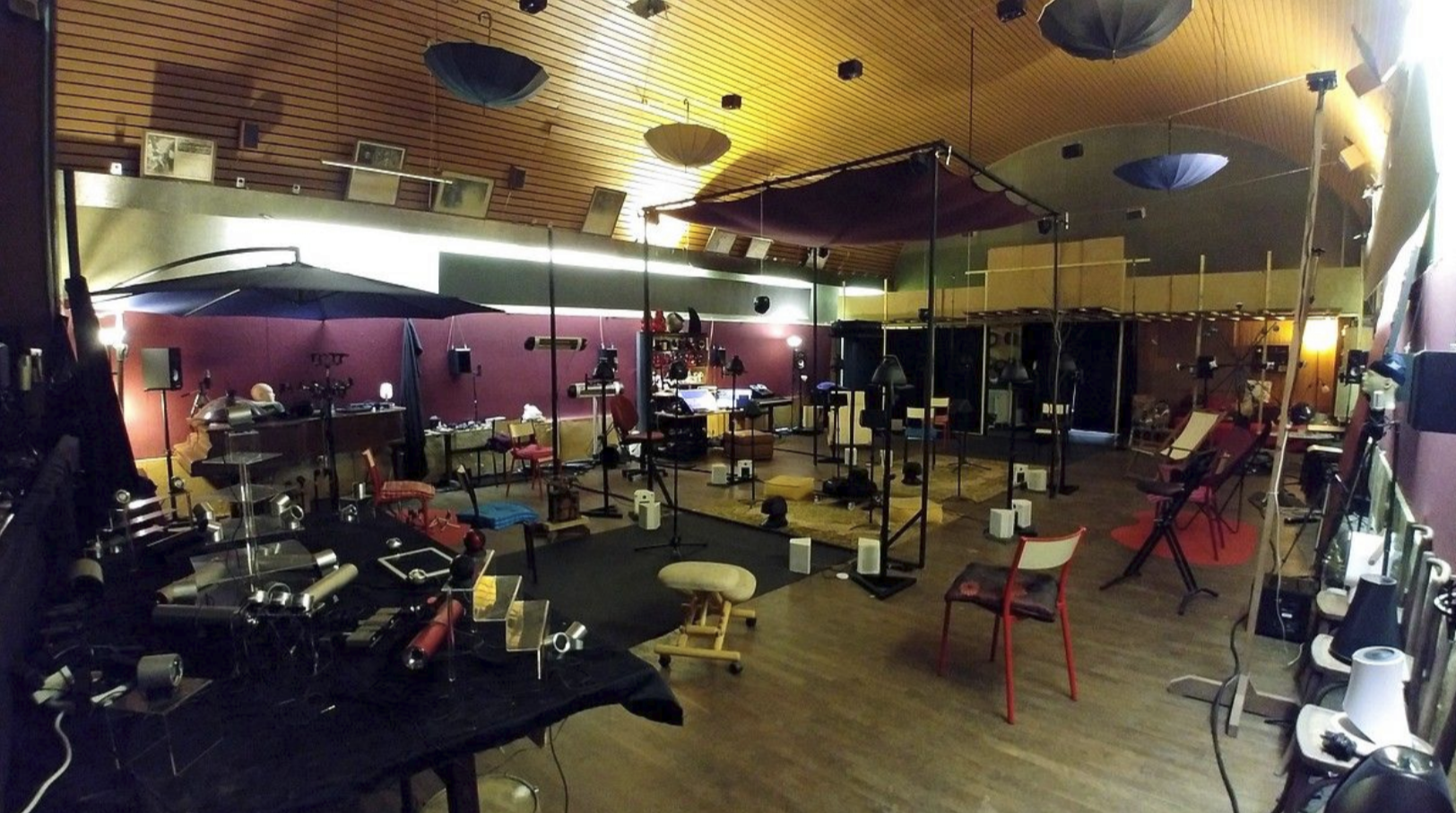
© des SONS dans l’air
des SONS dans l’air, LaMonnerie-le-Montel- France, coordination : Jean-Marc DUCHENNE, 80.3 system
In order to clarify a terminology - currently too muddled[3]- that would better define the spaciotemporal metrics of sound masses and the geodesic path of each of them in its curved space-time, the term volumiphony seems the most appropriate to define 3D multichannel diffusion. What's more, it follows in the etymological footsteps of its predecessors : stereophony, octophony, ambiphony, etc.
Concerning the space-time metric of sound masses: To summarize, in the case of general relativity, inertial motion is geodesic motion. The geodesic path is determined by geometry, and geometry is determined by the distribution of matter, which distorts the structure of space-time. An apple falling from a tree and the earth revolving around the sun both describe a geodesic path in their curved space-time.
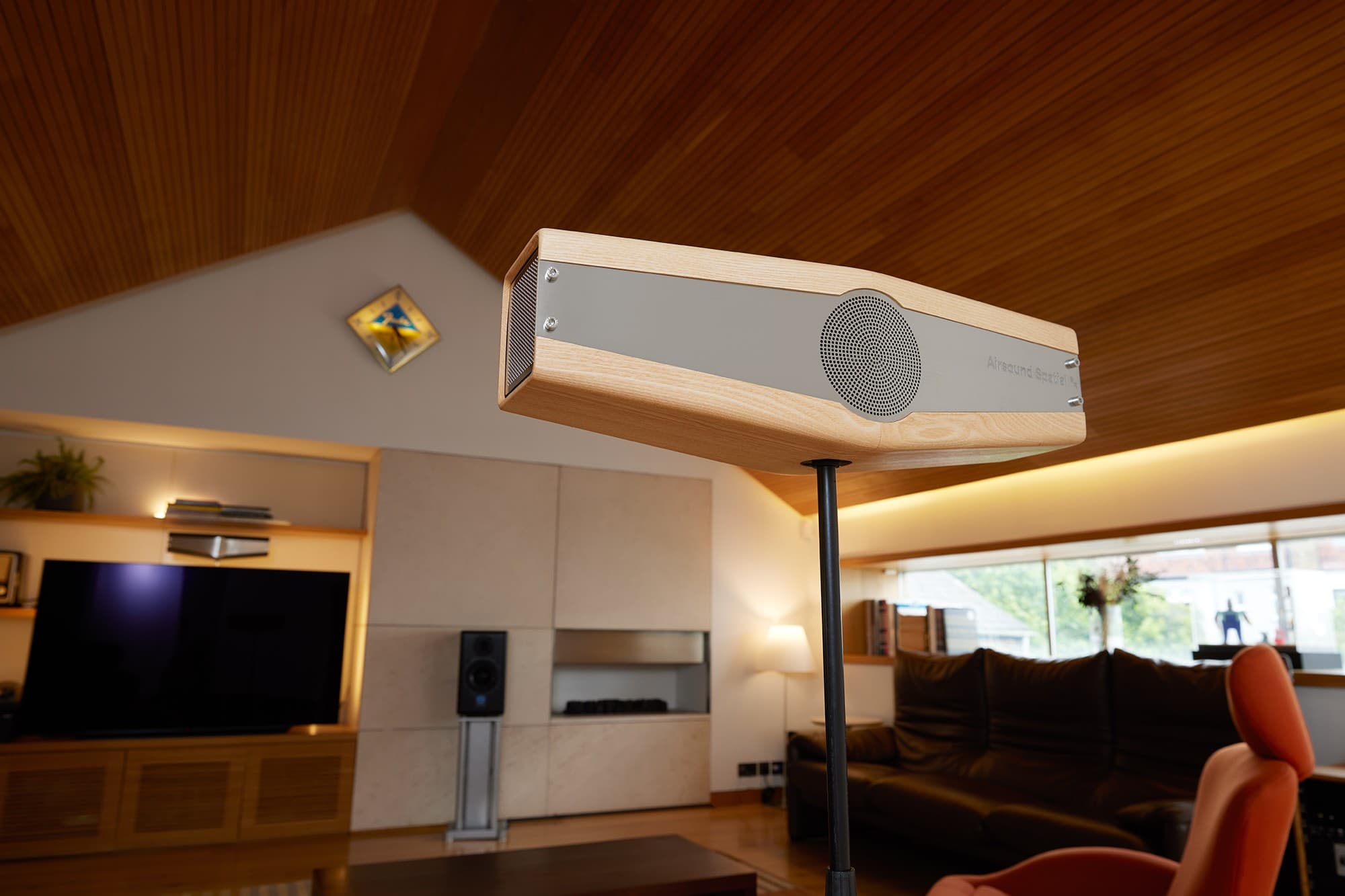
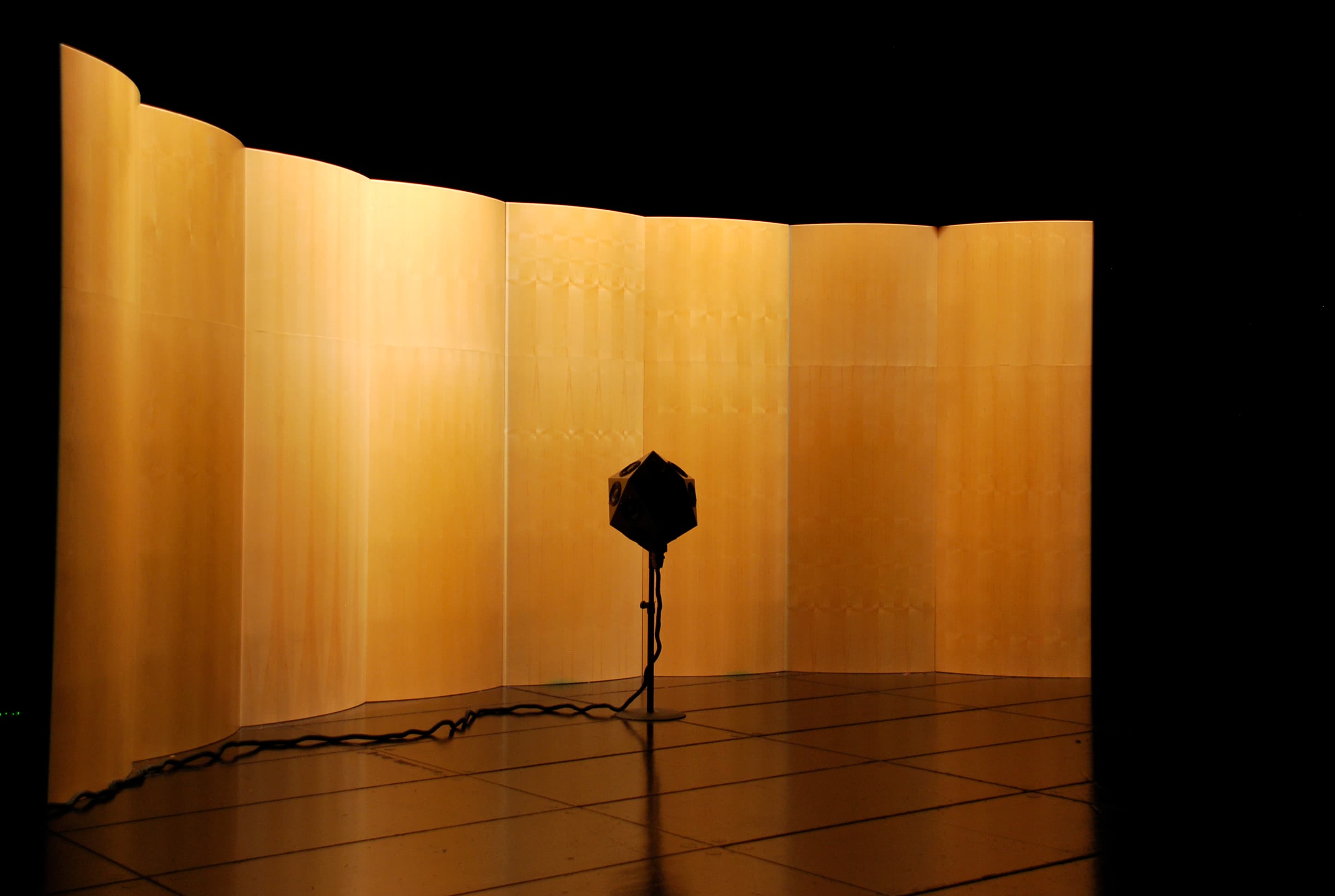
There are many other settings that can broadcast volumetric sound. The SAT - Society for Arts and Technology in Montreal (CA) has developed a unique spatial sound system consisting of multidirectional loudspeaker units, each containing 12 independent loudspeakers for a total of 60 channels. Known as "Audiodices", these loudspeakers allow audiences to move freely through an immersive soundscape, experiencing true volumetric spatialization. Designed to add a powerful immersive layer to installations, this system offers an entirely new way of listening.

© SAT