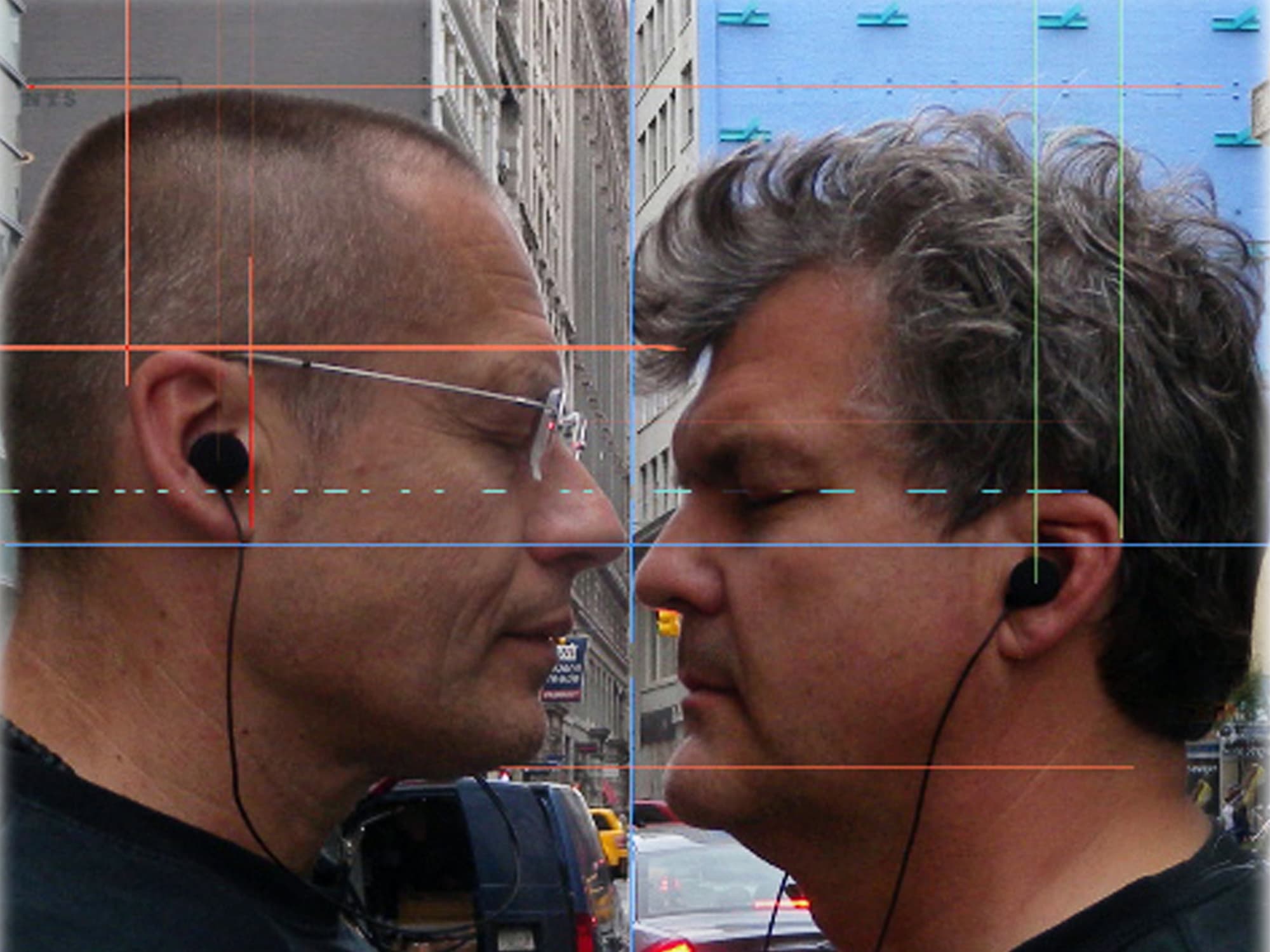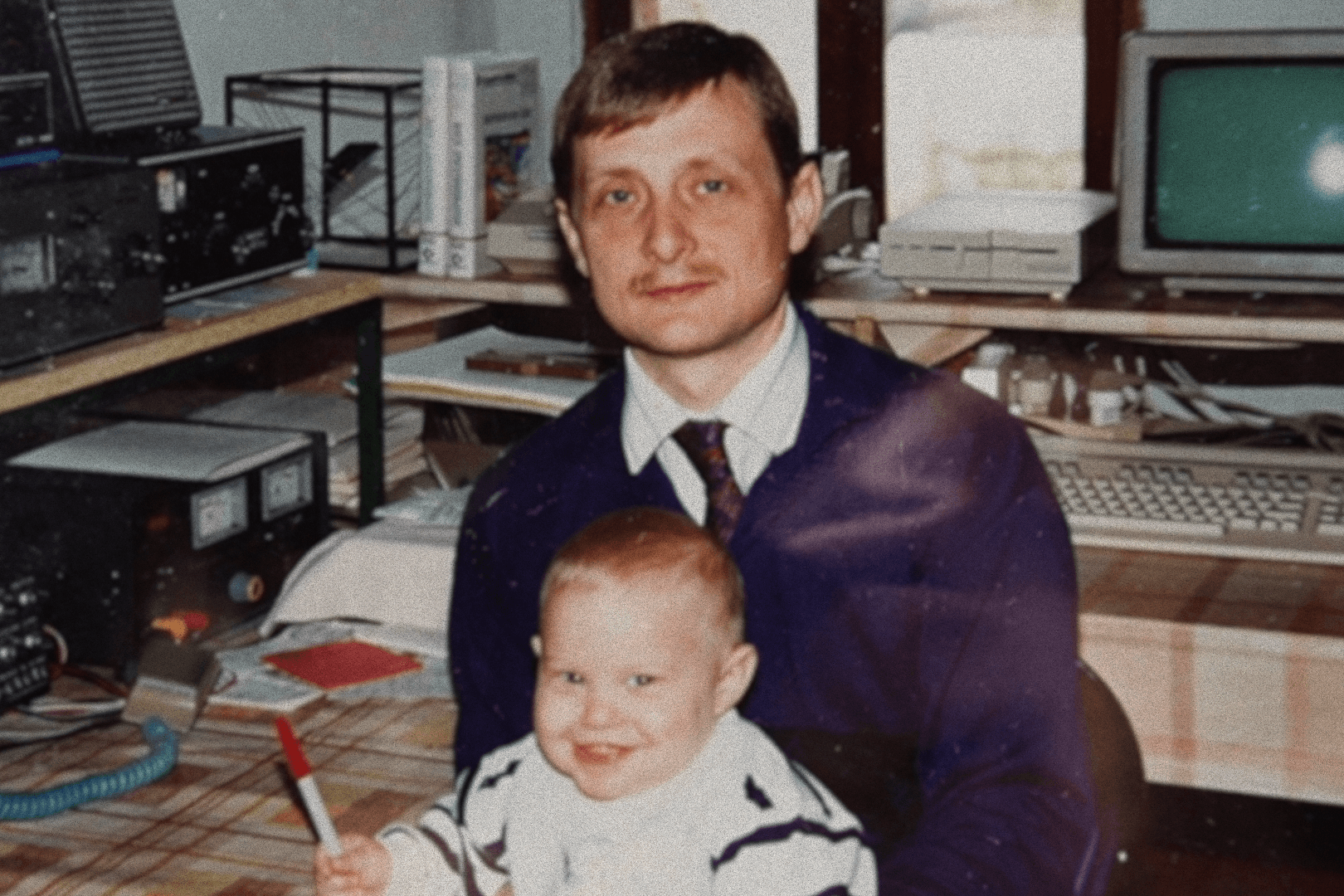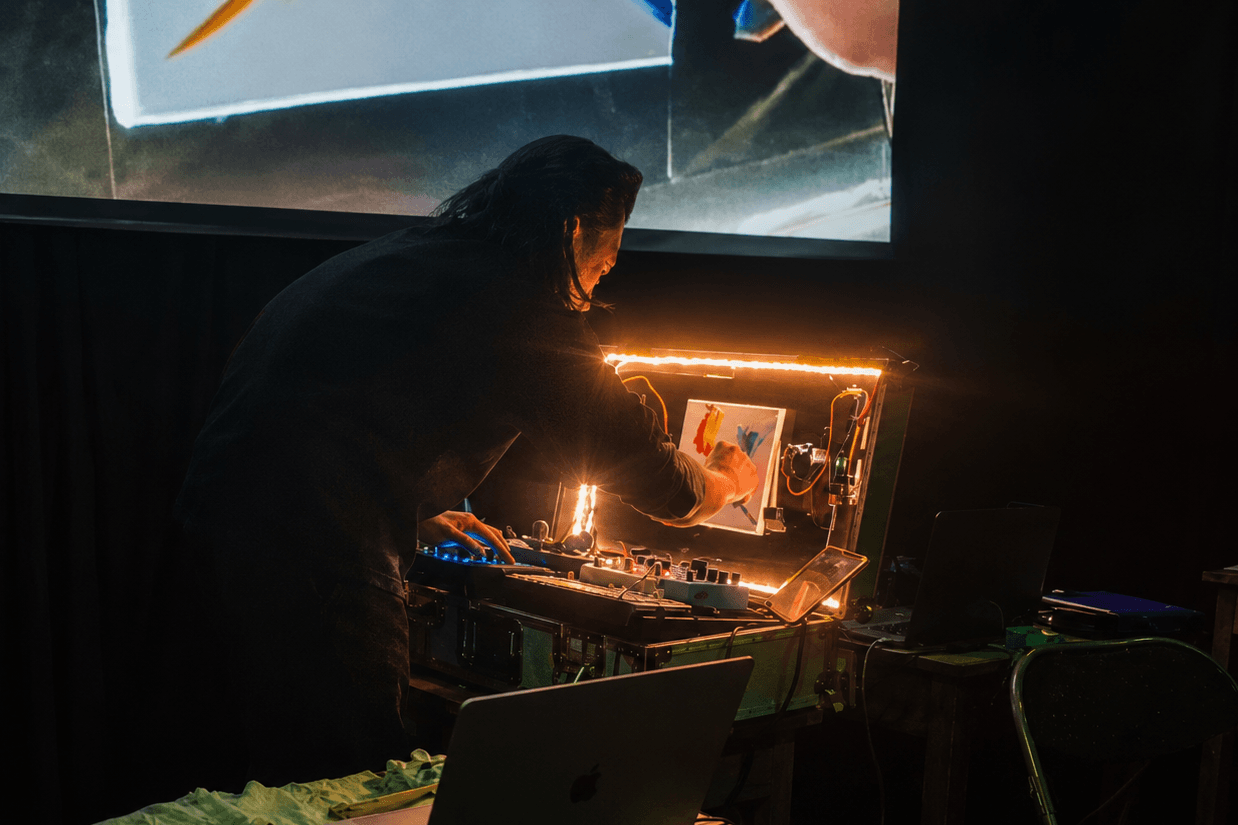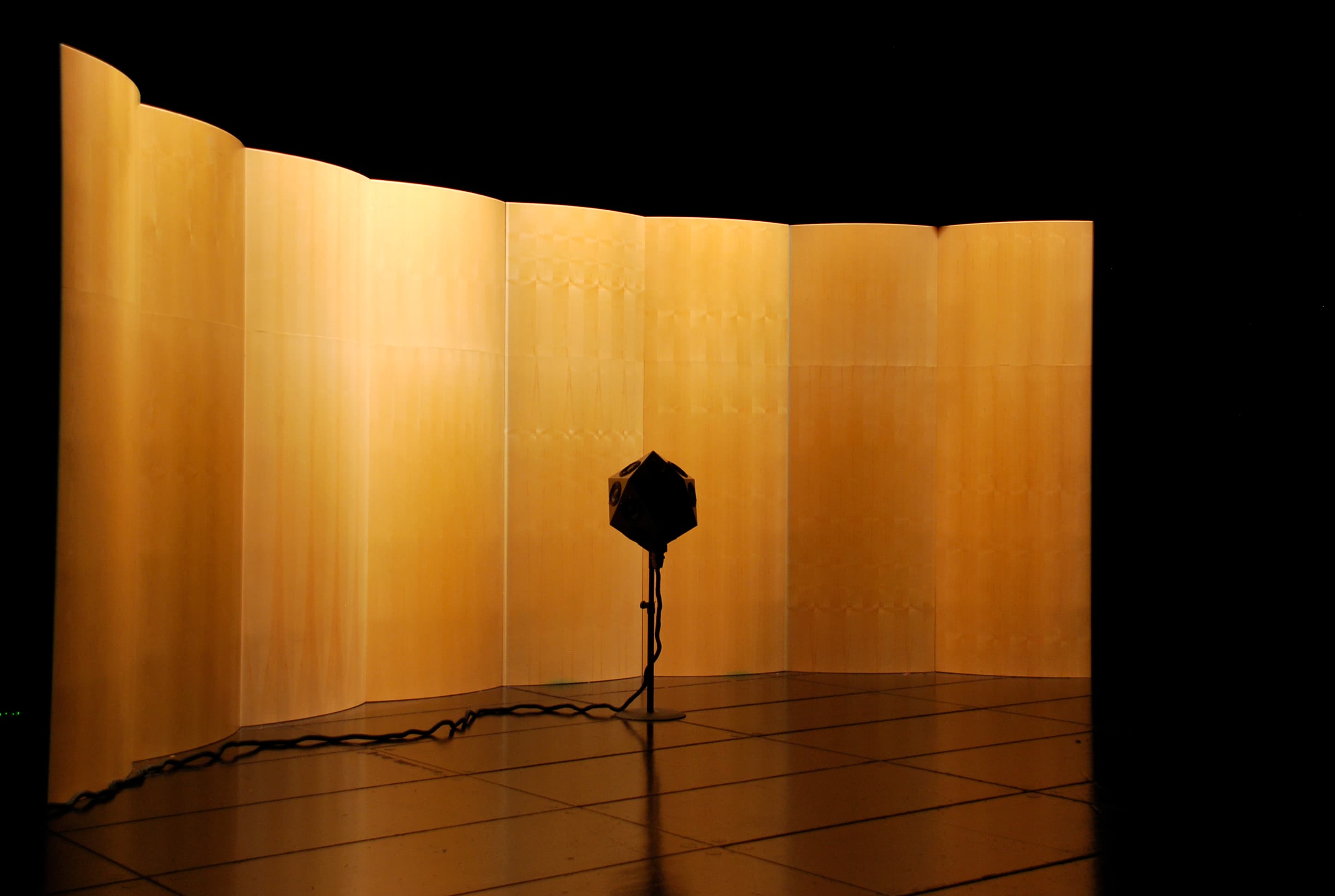

When I first met American composer and sound artist Bruce Odland at Ars Electronica in 1987 – I was invited by the festival director to assist Bruce with his installation – it became clear very quickly in our initial conversations that our respective approaches to the world were auditory ones. We were both firm believers that our everyday listening habits determined how we perceive music and sound. Focusing on sound installations/compositions in public spaces was therefore a logical next step for us. Two years later we founded O+A, using the term “hearing perspective” to describe our common starting point for our artistic explorations and in order to produce auditory art together.
Around 1993, after several large outdoor installations, we looked at our own situation. What is the starting point, and what questions are we pursuing? So, this text from back then and the Sound Stories shed light on each other retrospectively:
O+A Hearing Perspective (Hörperspektive)
Since the Renaissance, we have had an agreed visual perspective and language to speak accurately about images. We still need to improve this in the world of sound, where words fail us to even describe, for instance, the complex waveforms of an urban environment, much less what those sounds do to us and how they make us feel. We are lost in a storm of noise with no language for discussion.
Odland and Auinger are learning to make sense of our sound environment by listening with attention, hearing, exploring, and attempting to understand the cultural waveform as a language. In a primarily visual culture where decisions and budgets are often made through visual logic, we must note that thinking with your ears tells a very different story. Why does the MOMA sculpture garden, the bastion of High Art, sound like any taxi stand in midtown NYC? Why is an expensive "quiet" car quiet only when riding on the inside?
O+A collects, filters, and expands resonances found in nature and cities and tries to unlock their meaning. These sounds are often shut out of our mental picture of space as "noise." By listening to and studying these noises, they become helpful sound sources. Closer observation of these sounds often reveals a hidden music of exciting details, proper tones, and harmonics, even a potential melodic interest. We collect and archive these as an alphabet of sounds.
Sound Stories 01 Tunnel Walk - Architecture Speaks
O+A has developed compositional tools to sculpt and transform our sonic environment. These tools allow us to extract the harmonic material from city noise, filter it, shape it, and play it back in the moment to transform that environment's feelings, atmosphere, and sound design. We can extract the melodies and make the hidden voices hearable. This alters the psychoacoustics of a site, shifts the emotional landscape, and allows the people present to perceive the world through their "musical" brain instead of the part that decodes noise.
O+A does not import exotic sounds to their installation sites. Instead, they distill musical information from the ambient city noise. The compositionally chosen overtones of the collecting resonators produce a rich, harmonious chord that transforms the perception of the space, enhancing its aesthetic value in profound and unexpected ways.
Enlarging the selected musical resonances found at the site to a scale observable to the public requires a series of aesthetic and compositional choices. What is the usage pattern of the space, and how can we create a perceptual shift that would harmoniously enhance this? Where, within the architecture, is the acoustical focal point? Which visual aspects of the site create a valuable framework for listening?
When we make large-scale sound installations in public spaces, our starting point is the basic environmental soundscape of the site. Architecture, history, acoustics, and social dynamics of a given space are considered. Often, the visual and sonic aesthetic needs to be clarified. A carefully planned visual aesthetic of serenity, focus, and power can easily exist within the sonic chaos of cars, helicopters, muzak, and emergency sirens. The challenge is to regain information that our hearing can decode from that chaos and re-invigorate our hearing environment with that harmonious (version of) reality. (Croton on Hudson 1993)
So, over the years, we developed an installation format called by its main principle at work - resonance installations. In early 1992, by working on a piece at Trajan's forum in Rom, a storage place for Roman amphoras, we discovered by accident that we could use them as resonators for the traffic-heavy ambiance invading the window and doorless building.
It allowed us to transform the ancient Roman forum's ambient into a real-time harmonious reality. The final installation was called Traffic Mantra; it showed a noticeable mood shift towards calm by people at the site.

© Sam Auinger
Roman Amphoras at Forum Trajanum Rom, 1992
O+A compositional Tools
Resonance Tube
After using Roman amphoras (Rom, 1992) for the first time to filter and transform the actual ambiance of a site by enhancing an overtone spectrum on a chosen fundamental, we developed the resonance tube. The resonance tube allows us to define the tuning by tube length and position the microphone in the tube at an overtone position, enriching the transformed sound.

© Sam Auinger
The sketch shows the position of a microphone at the position three-sevenths of the tube length.

© Sam Auinger
The spectrograms show the exact moment one pure and the other transformed by the resonance tube.