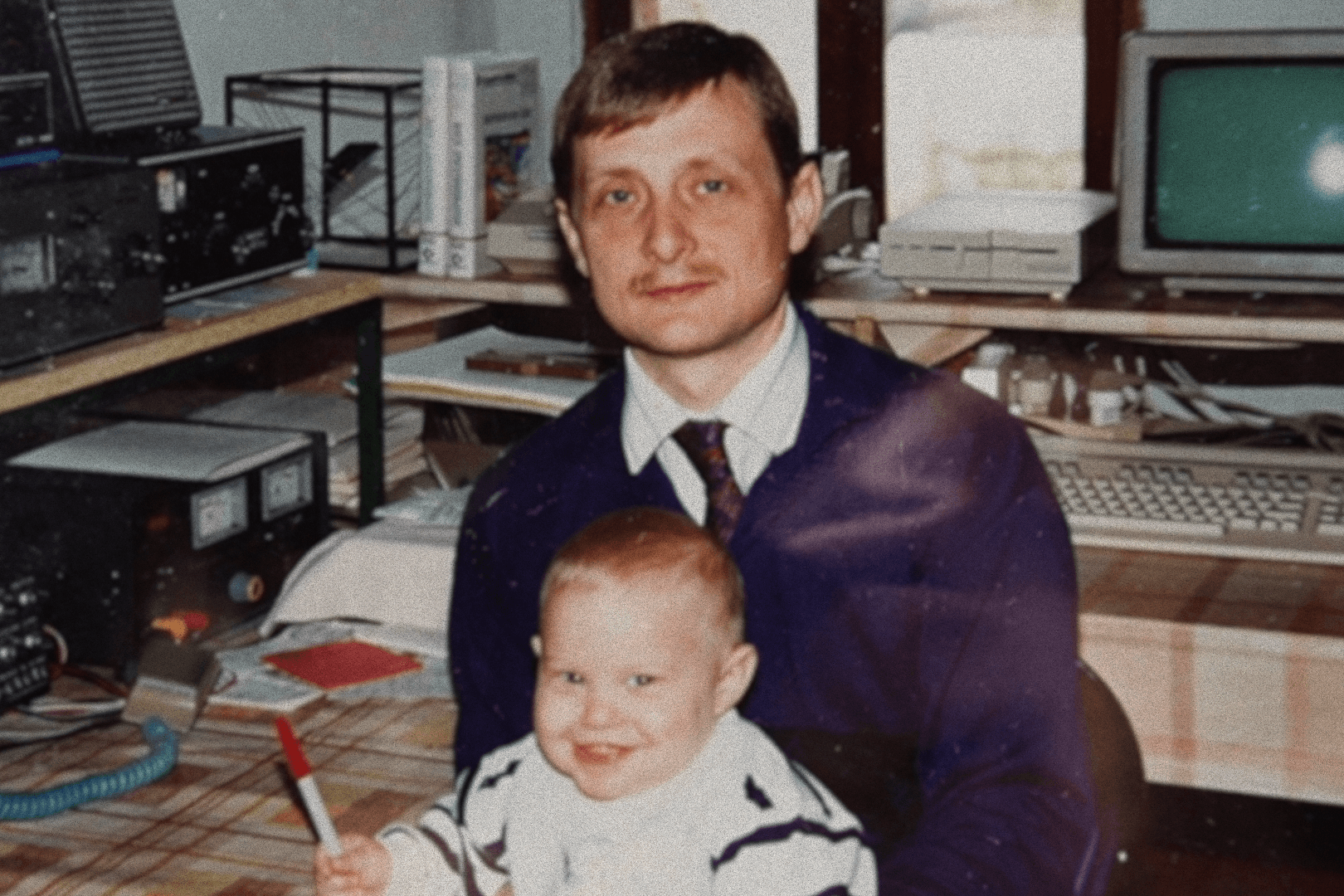
When I was a kid I used to hear the voices. Distorted voices, like they were ghosts, emerging from a sea of white noise. And criptic, incomprenhsible sounds. Notes that follow a precise rhythm coming from a speaker and resonating in a big room. And from that big room, when the door was open, they resonated in my whole house. The image that I have in my memory of this room is very dark, at night time, with high ceilings barely visible in the darkness. And a small feeble lamp that illuminates just a table with a lot of strange equipment on it, arrayed with buttons and knobs. My dad, barely scratched by the light, is sitting at the table in this big space, listening to the voices, looking for them and speaking with them in a strange language consisting of words, letters, numbers and sounds.
My dad Sante has been a radio amateur since his twenties. He makes his own antennas and he designed and built hundreds of them for other people across Europe in the last 40 years. Probably, in a subconscious way, my interest in sounds, noise, electronic instruments and DIY comes from this activity as a radio amateur I was exposed to since birth. I always had a huge fascination with radios, electromagnetic waves, science and technology. Growing up, though my path took me in another direction. I didn’t learn much about radio transmissions and was very far from the idea of being a radio amateur.

© Sante Gava
A radio amateur setup in the early 90s
A few years ago in my musical research process with aleatoric sound sources, soundscapes, and improvisation, I started thinking about radio signals and how to incorporate them in my music. I asked my dad if I could attend some of his sessions and talked with him about his radio amateur activity both on the technical side and on a more personal level.
Every day Sante takes his time, scans the noisy soundscape of radio transmissions with patience and focuses his ear to catch a voice, a sound, someone else out there. Then he tries to build a connection, he speaks in the microphone or transmits in morse code and waits for an answer. Sometimes it works, sometimes not. He tries again. If someone answers his call they exchange their code names (every radio amateur has to have one), position and a few more basic information then they leave that frequency free and move on to the next connection.

© unknown
Sante with a radio (1980 circa)
Code Languages, voices, noise
With my adult ears, those of a Pauline Oliveros, John Cage and Murray Schafer disciple, I discovered some amazing things simply by listening to him surf the radio waves. The audio material (tones, voices and noise) and the radio amateur's inherent approach, rooted in a deep focus on listening, resonated with me instantly.
To be able to listen to something human (or not) in this soundscape is such a unique feeling. Hearing some distant and distorted voices and signals is always a surprise and an otherworldly experience: sounds produced by human beings thousands of kilometers from you, electromagnetic natural events, machines transmitting information in code languages made of tones.
The most well known example: the Morse code. A binary code language made with a single tone, often around 600 - 800 Hz, with two distinct lengths, short and long. A sequence of these tones represent a letter or a number. Morse code uses just one tone and can convey only a limited amount of information per minute but more modern transmission languages use a combination of tones with specific intervals between them or even musical scales, generated by machines and then translated to pack more information in a shorter time span.
© Andrea Gava
Samples of different digital code languages
These code languages share with music and organized sounds some basic principles: pitch, length, rhythm, repetition, even harmony, but for a human ear they are mysterious, encrypted and cryptic alien to music. They have a precise purpose but they are also open to other interpretations. Their connection with music is there, but it is only partial and hidden under the surface. The ambivalence in the form and meaning of code languages makes them one of the most fascinating soundscapes for me, on the edge between noise and music, human beings and machines trying to establish a contact.
A big part of this soundscape is also the human voice: people speaking directly with each other, using mostly code languages made of numbers (“73” for example means “greetings”) and acronyms (like the Q code, consisting of a combination of 3 letters). The goal is always the same: efficiency. Packing the biggest amount of information in the shorter time span possible and frequently in non-ideal conditions, where background noise to signal ratio is very in favour of the first one.

© Chiara Uliana
Sante speaking at the microphone, transmitting with a portable station from Nevegal, 900 meters above sea level (Belluno, Italy)
The more I listen to this soundscape and discover its features the more I know it has to be part of my work. But my interest doesn’t focus solely on the aural part of radio communications. It expands and touches also other contextual aspects of this world.
Not just sound: technology, science, politics and history of radio
The radio world for me is fascinating not only for its soundscape, but also for its technological, scientific and political weight, proving that technology is never neutral. Setting up a radio station requires neither massive infrastructure, high energy consumption, nor corporate backing. It is a fundamental, accessible technology that anyone can deploy.
It is for example vital during emergencies, such as natural disasters or state-enforced internet blackouts, when other communication networks fail. Because it can operate in remote areas with minimal resources, radio is deeply democratic. It effortlessly crosses borders to share information.
At the same time radio is a very refined technical achievement, that combines different technologies and scientific knowledge in many fields: physics, geography, electronics, meteorology and more. It uses antennas, circuits, computers and radio waves that travel thousands of kilometers, bounce on different layers of the Earth’s atmosphere and even on the surface of the Moon.

© Chiara Uliana
Sante and Andrea with two DIY dipole antennas attached to a telescopic metal pole, testing a portable station
Radio is a fundamental technology in our everyday life even if we are not aware of it. Our phones, WiFi routers, TVs and every connection that doesn’t use a physical cable contains an antenna and creates a radio transmission. From the technology in our pockets to the deep space satellites and human artifacts, radio is everywhere.
Last but not least the world of the radio transmissions is also deeply connected with electronic music and its history. Radio and electronic music share the same technological background made of vacuum tubes, circuits and ICs since their birth.

© Sante Gava
Radio amateur equipment from the 80s
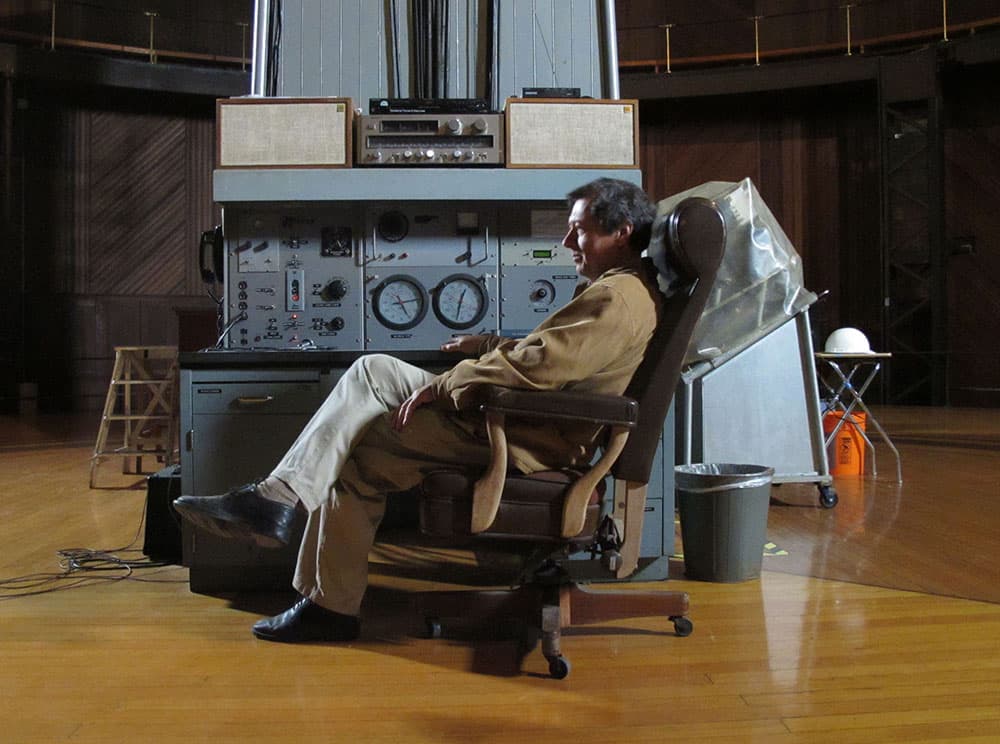
The connection doesn’t end there. The history of electronic music is bound inextricably to the radio as a media. The early era of electronic music took place in national and private radio studios (the BBC Radiophonic Workshop in the UK, the Studio di Fonologia RAI in Italy, just to quote two well known examples) where the expensive and huge electronic instruments and recorders were located, most of the time specifically built for those studios, used and maintained by composers, musicians and technicians.
Radio to me represents an endless source of inspiration, loaded with metaphorical and creative meaning, particularly in the field of electronic music. I decided I wanted to explore these two intertwined paths in my work. That soundscape driven by the will of communication that crosses borders and connects people had to be part of my music. I wanted to take it out in the world and share it with an audience.
TO COMMUNICATE: electronic music, improvisation and found sounds in the electromagnetic world
I started thinking about To Communicate in 2021. At that time my work was deeply bound to the idea of aleatoric sound sources, since I was in the middle of my exploration of no-input techniques and audio feedback: sounds created with machines that are not supposed to make sounds but just to channel them, giving a new meaning to a technology created for another purpose, using interfaces designed for a specific function in unexpected and unintended ways. The radio as a found-sound source seemed to fit pretty well with this concept.
A sound source that you cannot completely control requires a different approach from the one used with a musical instrument, both in terms of performance and composition: it is more of a machine that you can enter into a dialogue with. Listening, action and reaction to what happens inside of its circuit. But you are never fully in control of the situation. For this reason improvisation is a huge part of this project as much as in my whole musical research. It is inherent to it. The premises above make it impossible to separate man from machine and the tool from its user, thereby putting the focus on listening and interplay with the machine itself.

© Paolo Pandin
Andrea Gava recording session with no-input mixers (from the album "Implosions")
Unpredictability: a concept that totally fits with the idea of using radio transmissions as the main material for a music composition. A soundscape made of found sounds where you will never hear the same thing twice: everything depends on the time of day, who is transmitting at that moment, the weather conditions, the distance between you and the sender and the devices you use. It is a completely autonomous soundscape that follows its own rules. But how can you combine it with no input and feedback?
At a surface level no input seems the opposite of radio communication: it is a signal that stays in the same place, a feedback loop that goes nowhere, cause and effect are denied (the output influences the input of the system that changes the output that influences the input and so on), time is defeated, it is a closed circle. On the other hand the waves that you transmit with a radio travel around the globe and through space and time, they connect two points with the goal of communication.
But in the end feedback and radio transmissions have more in common than you can imagine. Their timbre, how they sound, is similar: background noise is always their source, the sea of electromagnetic fields and electrons where they belong. So I was very surprised to recognize a natural coherence between them on a sonic level.
The idea to combine them for me was particularly fascinating. It is a way to overcome their specific purposes and their nature, to break a barrier. On a metaphorical level in To Communicate I want to create a new sonic world based on communication (radio transmissions) and internal self reflections (no input and feedback). The presence of both in this world is such a rich and vast field to explore.
Trying to communicate an inner and apparently closed world (our inner one) and create a connection with someone else is such a basic need that I consider this project more human than it first seems.

© Paolo Pandin
Recording session with no-input mixers
Technology is an inherent part of this process as well as the relationship between humans and technology. A bond that we have faced since the beginning of time and that is part of our life nowadays more than ever. To Communicate takes the relationship between man and machine and exposes it directly: a basic, inner and deep human need for connection is made possible through the use of machines and science and technology. But these are not only means. They are what changes our perception of the world, our possibilities and our presence on earth with other human beings.
Everything in To Communicate sounded great to me on a conceptual level. It was time to put it to test. In 2021 I asked my dad to let me join one of his usual radio sessions. I took his audio signal and processed it live. We ran this experiment a couple of times, then the project was put on hold for personal reasons.
Guglielmo Marconi and an acousmonium
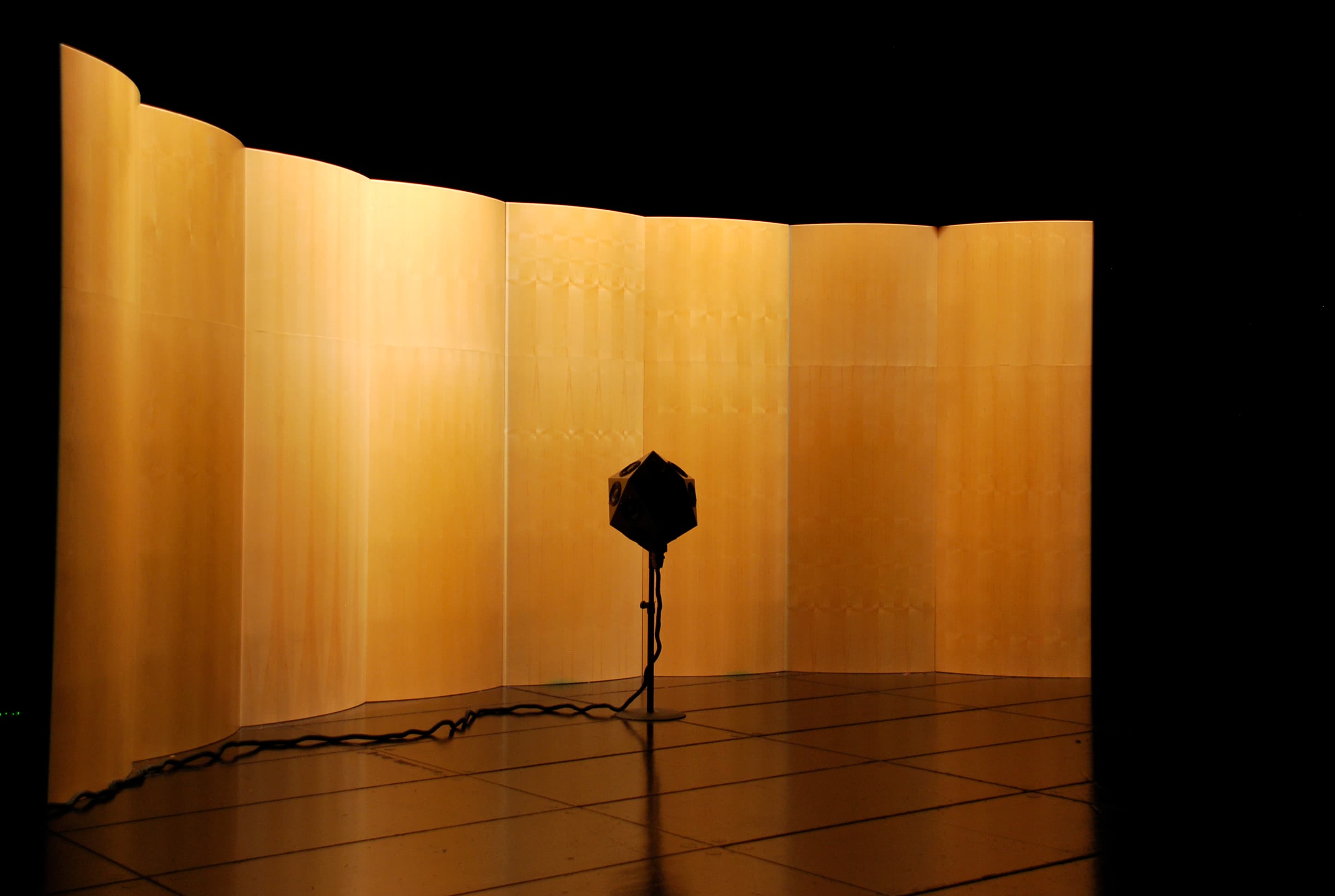
In 2024 I heard that a couple of friends, Nicola Facchini, a visual artist, and Giuseppe De Benedittis a musician, built an “acousmonium” called OrganoMotore: a series of handmade speakers made of wood, metal and resonant surfaces created to play electronic and electroacoustic music. OrganoMotore is composed of 16 speakers that cover the entire audible frequency spectrum and even some that we can just feel on our bodies as air pressure: the bass shaker, a huge loudspeaker, plays frequencies from 80 Hz down to 1 Hz, well below the capabilities of the human ear. More info about OrganoMotore here.

© Cane Studio / OrganoMotore website
OrganoMotore (acousmonium by Nicola Facchini and Giuseppe De Benedittis)
I met Nicola when we both studied in Venice, around 10 years ago. He was at the Accademia di Belle Arti, making paintings and sculptures. Now he is an established contemporary artist. I was curious about the origin story of OrganoMotore, which is a rather different artwork from what he used to do, so I asked him: why? He told me his ears don’t work very well lately so he wanted a device to listen to some music at higher volumes.
He took the DIY route and looked for electronics and amplification systems schematics, studied projects of acoustic loudspeakers, trumpets and subwoofer cases and started to build his own sound system. OrganoMotore was born. The name comes from the first prototype, which was made with pvc tubes, like the pipes of a church organ, and eventually they were replaced with wood structures to reach its final form. In 2024 Nicola and Giuseppe took it on tour and they invited many musicians to play with it in each place they installed it.
OrganoMotore is not just a handmade sound system, it is a sculpture, an instrument, an object that transforms the space with its physicality and the sound that it produces. An amazing artwork that I decided I wanted to play with. I asked Nicola and Giuseppe: when? They answered me. May 2025.
In April and May 2025 OrganoMotore was exhibited in Villa Davia, a XVIIIth century villa in Borgo di Colle Ameno, Sasso Marconi, near Bologna (Italy). It is part of the contemporary art exhibition Closer by Studio Yoshida, Spazio relativo and Adiacenze.

© Andrea Gava
To Communicate rehearsal at Villa Davia with OrganoMotore
A few hundred meters from Colle Ameno there is Villa Griffone, the place where Guglielmo Marconi, a radio pioneer, discovered the possibility of communicating wirelessly over a distance and made his first experiments at the end of the XIXth century. Now Villa Griffone is the Marconi museum. “Closer” draws inspiration from Marconi's scientific legacy to investigate the relationship between technology and human relationships through the language of contemporary art.
I felt a jolt in my stomach: OrganoMotore and an exhibition dedicated to radio communications. It was perfect: the first live performance of To Communicate played on OrganoMotore sounded like a dream.
Unveiling the unhearable to an audience
I asked my dad to build an antenna, teach me how to set it up and how to use a radio receiver. We chose to use a single pole antenna: a simple cable that can be attached anywhere up in the air between two points. A very rudimentary solution, but the easiest one to overcome the site specific problems related to the place where OrganoMotore was. It was also a sort of philological solution because it was very close to the system used by Marconi in his first experiments.
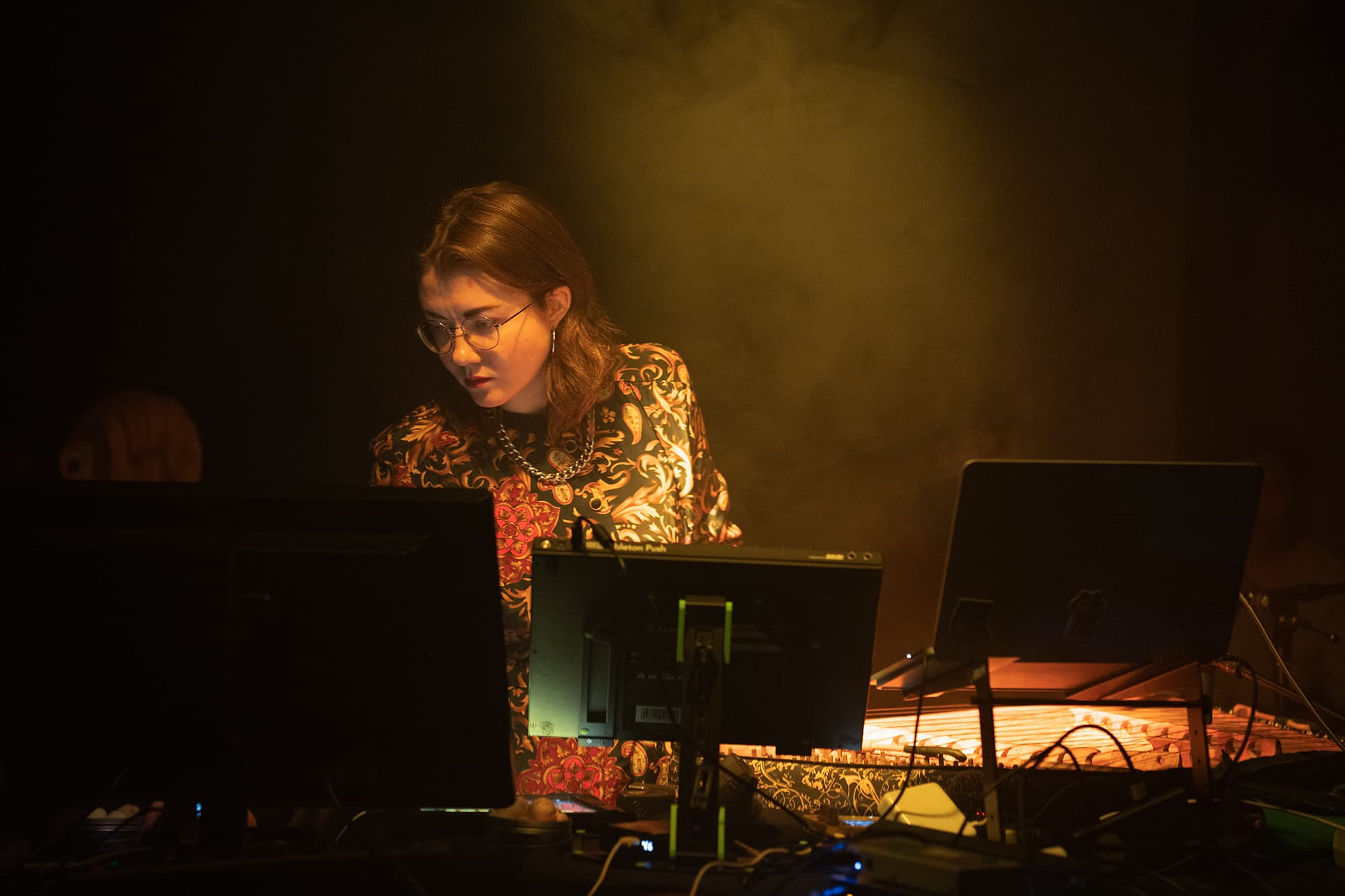
We ran a couple of tests at home and then I packed everything: my no-input mixers, the radio and the antenna. I went to Villa Davia for a three-day art residency, that included a final concert, To Communicate world première, on the 7th of May (my birthday! A great way to celebrate it).

© Andrea Gava
Setting up a single pole antenna (the black cable coming from the right side of the picture) in Villa Davia
I set the antenna up in the back of Villa Davia, between the ruins of some of its older wings and a window in the room where OrganoMotore was placed. I connected it to the radio and the radio into my no-input and feedback based setup, where the audio mixers, equalizers and filters are patched into themselves to generate sound. I played with it for three days.

© Andrea Gava
DIY antenna interface, radio and no-input mixers for the world premiere of To Communicate at Villa Davia
On the second day I was lucky to catch a radio amateur taking his final exam to gain his license. Without it you cannot legally transmit any signal through radio waves. Radio amateur activities are considered a service and are regulated by national and international laws. Another hint about the political and social relevance and power that radio communications have.

© Andrea Gava
Radio and OrganoMotore (in the background)
Of course I don’t have a license so I was only able to receive signals and listen to them. It was intended as part of the project because To Communicate is a performance that reveals to our ears the soundscape generated by all of these communications that surround us and transform it in real time through live electronics. A soundscape that, through science and technology, literally represents the basic human need to overcome distances, to create bridges between people.
During the performance I tried to connect with my dad who was at home, hundreds of kilometers from the concert location, but his voice came very distorted and difficult to recognize in the background noise.
© Andrea Gava
Sante's transmitting from his home during To Communicate world premiere. The signal was too weak and got lost in noise.
The full concert is available here:
© Andrea Gava
To Communicate (world premiere)
Listening as a collective practice
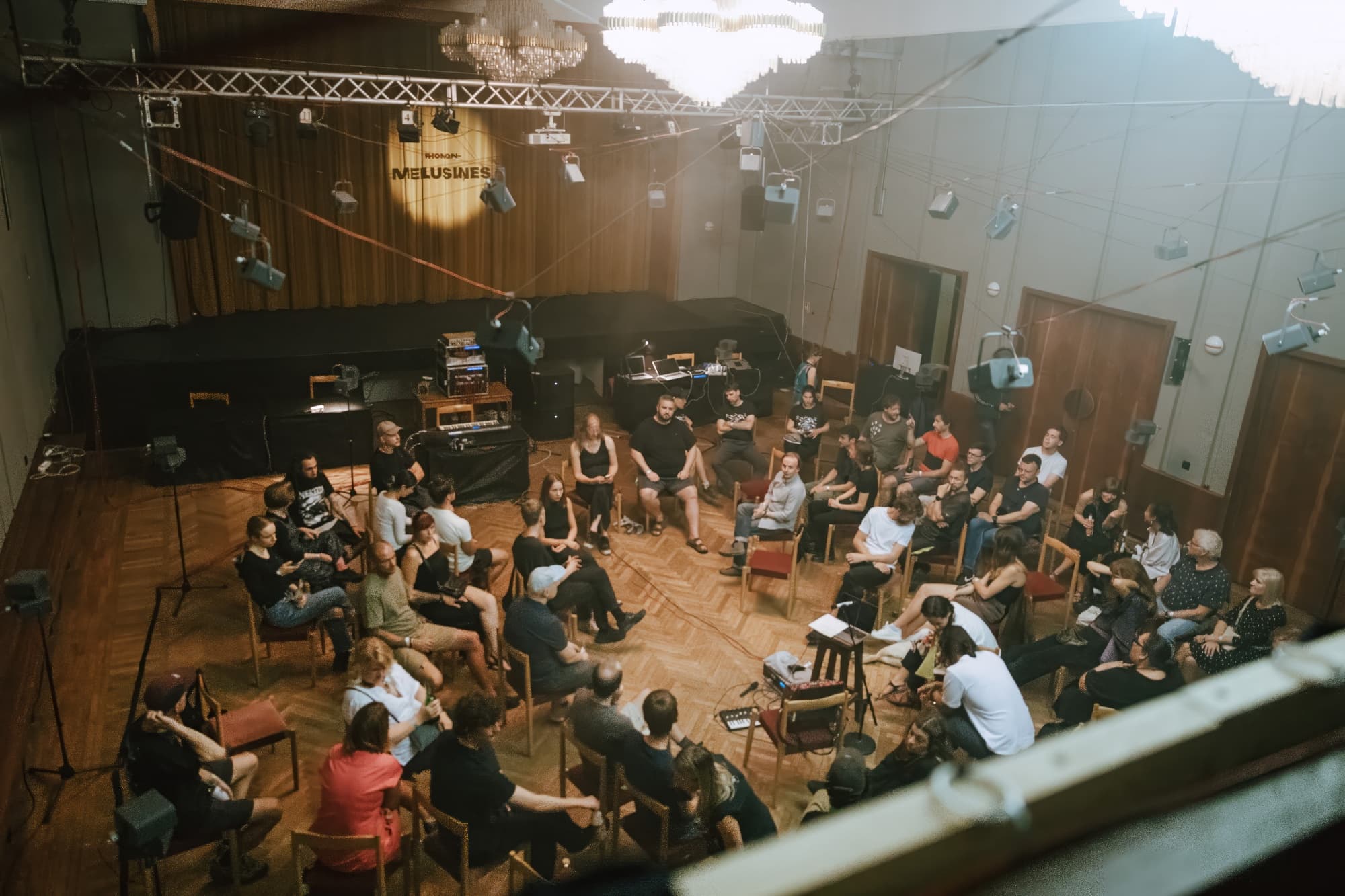
The second public performance took place during Radia. Minifestival di radioascolto at Memoriale Veneto della Grande Guerra, Montebelluna (Italy) in February 2026. The festival focused on the act of listening as a collective practice and on the radio as a core media of the 20th and 21st centuries. It featured podcasts, contemporary music, sound poetry, listening parties. It was braodcast live by USMARADIO, the Interdepartmental Research Center for Radiophony of the University of the Republic of San Marino and supported by the Italian national radio, RAI Play Sound, RAI Radio Techetè, Fondazione Bonotto and Regione Veneto.
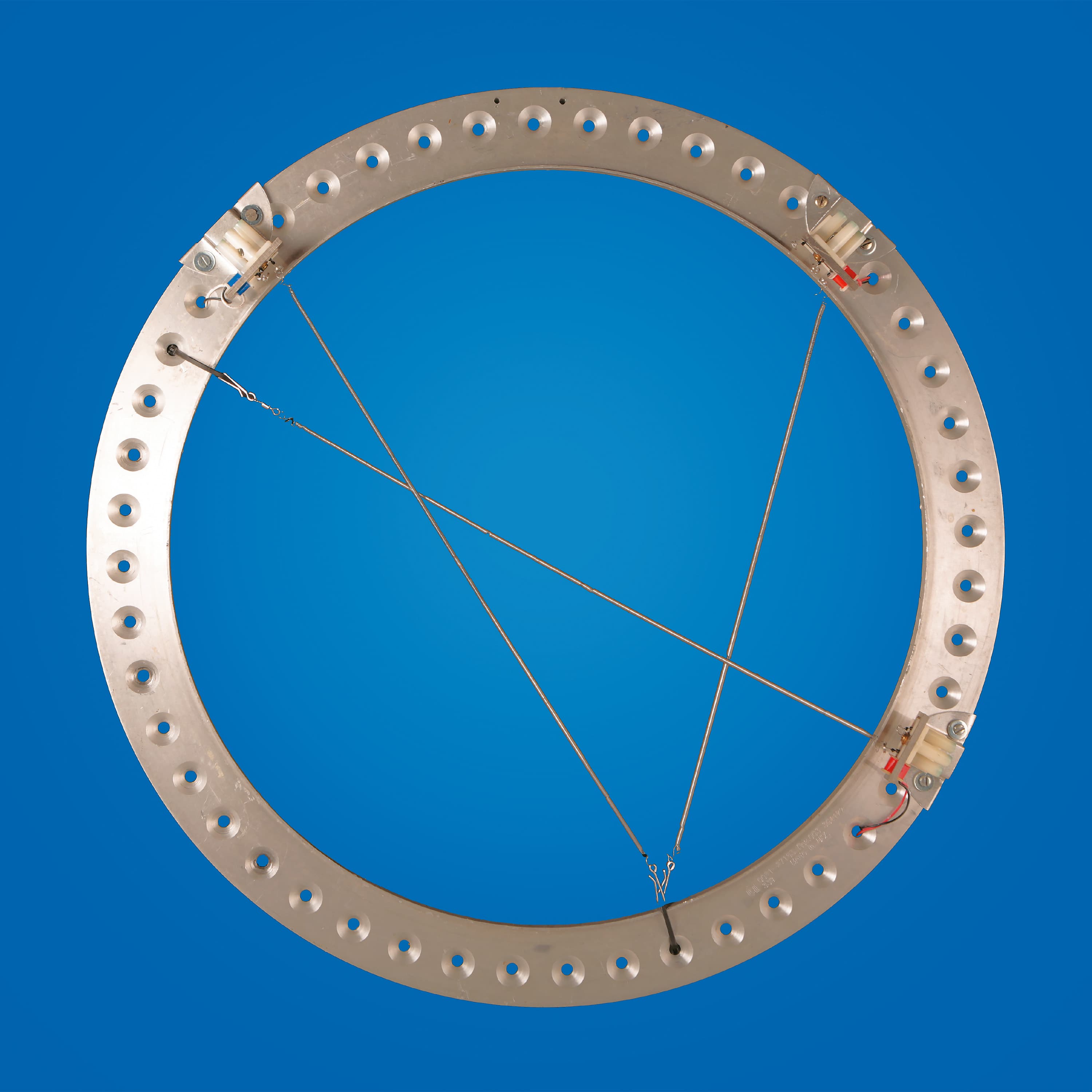
This time we were close to my father’s house so we were able to install a new antenna together in Villa Correr Pisani, an 18th century Villa where the museum is located. We used a dipole antenna: two cables at 90 degrees attached on the external walls of the villa.
The more I progress with this project the more I realize its site specific nature is not confined to the aural world. It translates also as an installation (the antenna) that enters into a dialogue with the space where it is placed and becomes part of it. It respects the space (mundanely speaking: the safety rules) and transforms it with its presence, as a totem that unveils sounds that surround us but that we cannot hear.

© Alessandro Renzi
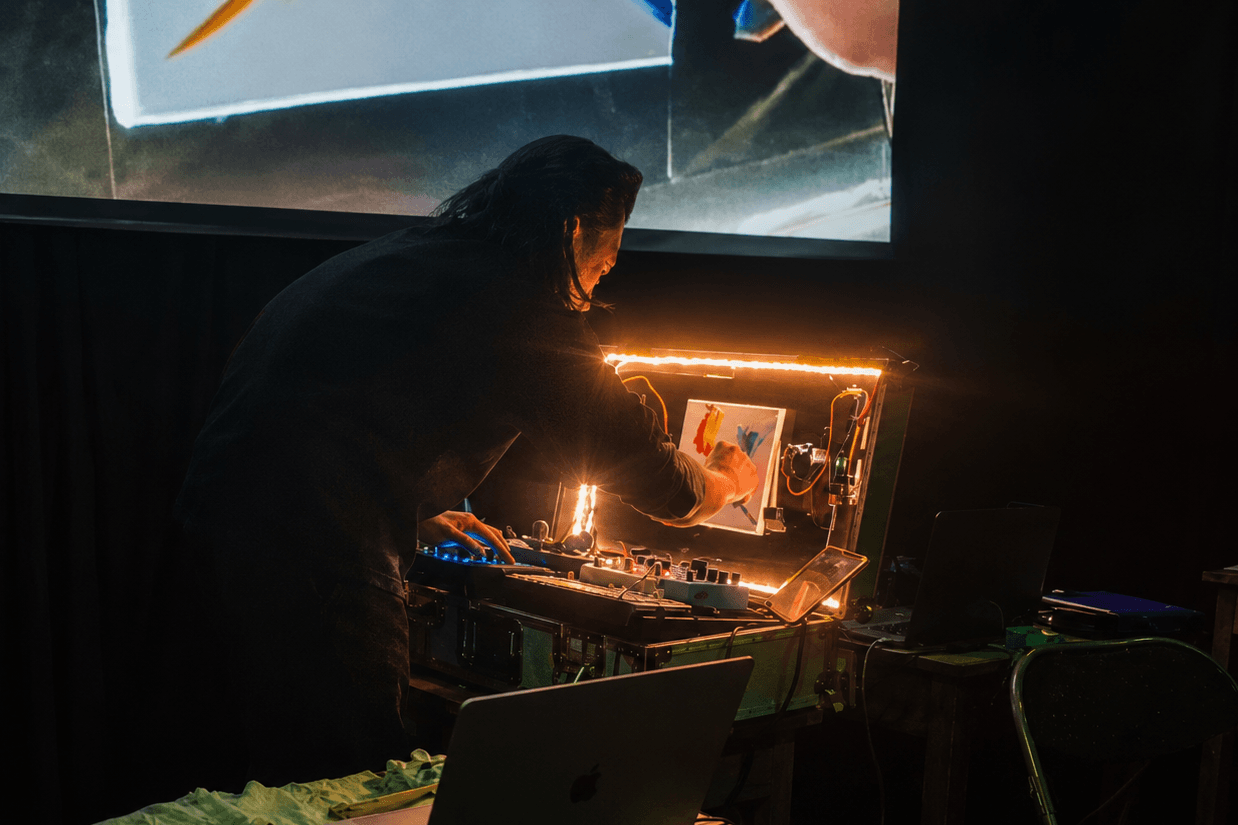
To Communicate live at Radia
The concert was also a step further in involving my dad in the project: we scouted the location, decided which antenna to use, built it together, installed it. Last but not least I asked him to have a radio session on stage during the concert. I would never have thought that at some point in my life I would be playing a concert with my dad (by the way he is not at all into contemporary music. He listens basically only to European music composed before the 17th century).

© Andrea Gava
Sante during the sound check at Radia Minifestival
The performance was preceded by the screening of the documentary “To Communicate – a Son, a Father, a Radio” that displays the process behind the world première of the piece at Villa Davia. At the end of the concert my father and I had a public talk and a Q&A with the audience about the whole project, the relevance of the radio in nowadays technological, social and communication context, the antennas, the radio amateur world and the strong bond with contemporary music, listening practices, sound and human connections.
© Andrea Gava
A documentary about To Communicate and its world premiere
The latest developments
Since that last performance, my dad has built a few portable antennas for outdoor sessions. Something he hasn’t done in many years. We tested them in September 2026 in Nevegal (Belluno, Italy), 900 meters above sea level, in the Dolomiti region. This time, we focused on the role of spoken transmissions, whereas in previous sessions the main sound source was tone-based. The in-real-time manipulation I applied in that context underlined the rhythm, the accents, the voice as a sound matter that conveys a meaning but it also pure sound emerging from the distance. A documentation of this work in progress is available here:
© Andrea Gava
To Communicate with a portable setup
I can see he has a renewed drive toward radio transmission since our concert together in February. He has updated all of his systems at home and has even started creating new antennas unrelated to our collaborations.

© Andrea Gava
Sante testing a new antenna at home

© Andrea Gava
A portable antenna (detail)
A son and a father
To Communicate cannot exist without my dad. He has an essential role in this project not only for the technical side of it.
I’ve never talked that much with my dad. He is quite discreet and silent about his inner world, his emotions. We haven’t had many conversations during our lifetime about our feelings.
This lack of communication has always bothered me, more and more during the last years. I know that I’m responsible for this too so I decided to make a change: now that we are becoming older I want to try to create a new bridge between us, a way to communicate.
Music and sound. A creative process that involves one of his passions, the radio, specifically conceived to supply this basic human need for connections and communication seemed the perfect way to do it. A way to make things together, to be creative, to talk and to listen, to connect deeply with each other. To Communicate for me has a personal and emotional value beside its universal meaning.
Of course this is just a little step. It’s an attempt to communicate, in a rudimentary way maybe, and failure is part of the process too. Communication doesn’t work every time. It is full of compromises, misunderstandings, conflicts, distance. But it is important to try. Again and again. In these dark and violent times where borders and wars are part of our everyday lives to communicate is more necessary than ever. We need to do it. And I will.

© Alessandro Renzi
Andrea and Sante after the performance