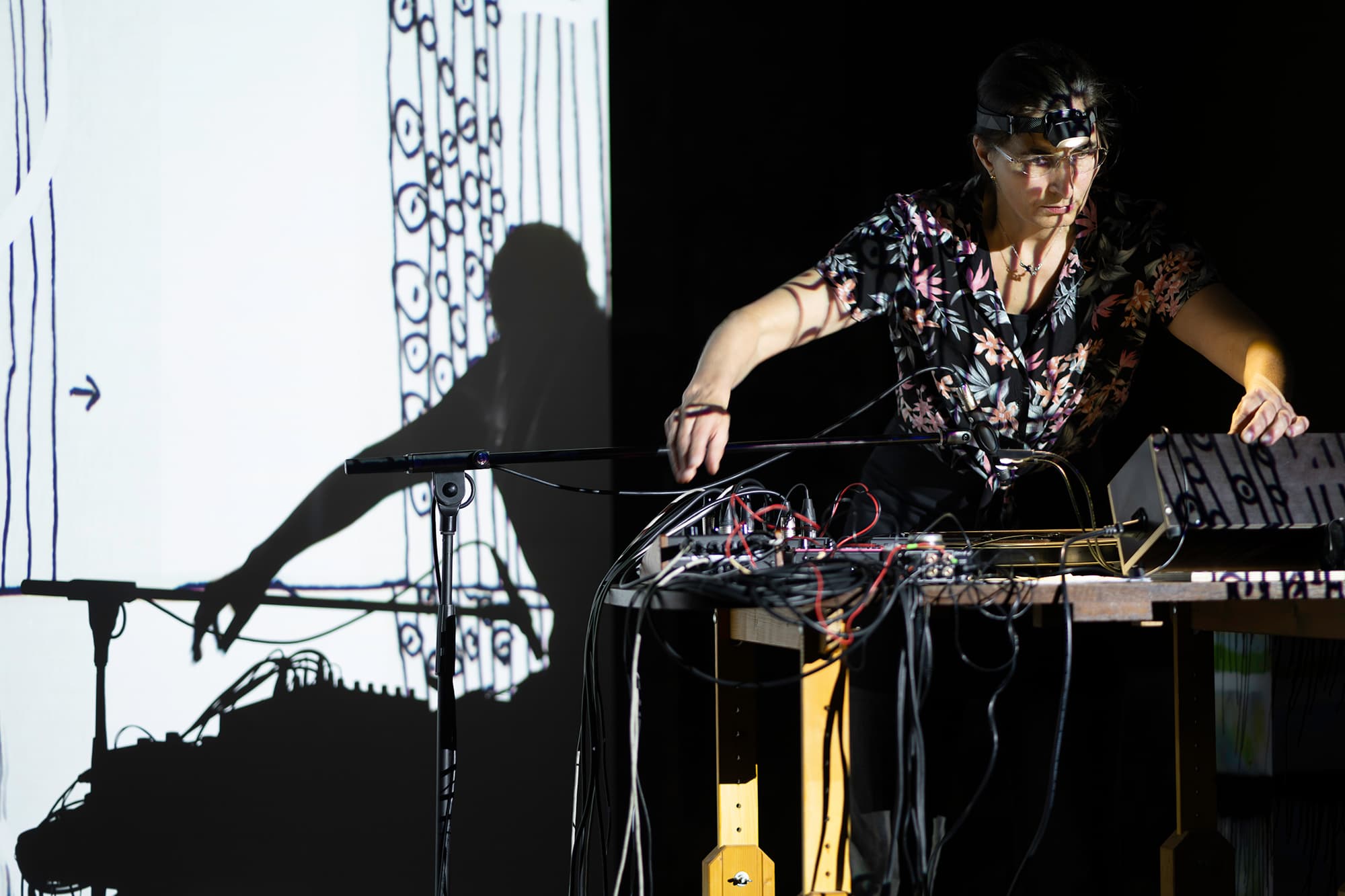

Audio-naturalism is not a genre of recording. It is a way of being somewhere, and almost nothing about it has been written down.
There is a French word for what I do, audio-naturaliste, and it does not survive the crossing into English. People translate it as wildlife sound recordist, which makes it sound like a job description on a film crew, or as field recordist, which is so broad it includes someone taping a market in Marrakesh. Neither is wrong and neither is it.
The clearest definition I know is one of posture, and it goes like this. A bioacoustician works from a protocol. They know the species, the season, the behaviour they are trying to capture, because the recording is evidence for a question already formulated. An ecoacoustician widens the frame to an entire soundscape and asks about the health of a system rather than the voice of an animal, usually with autonomous boxes running on a schedule for months.
An audio-naturalist goes out without knowing what they will record.
That is the whole difference and it sounds like nothing. In practice it reorganises everything: what you carry, where you stand, how long you stay, what counts as a good night. One discipline is looking for data. The other is looking for the sensible trace of something that happened once and will not happen the same way again. I move between the two constantly, sometimes inside a single night in the same cemetery, and I can tell you the switch is not technical. It is a change in what you are willing to accept as a result.
© Thibault Noirot
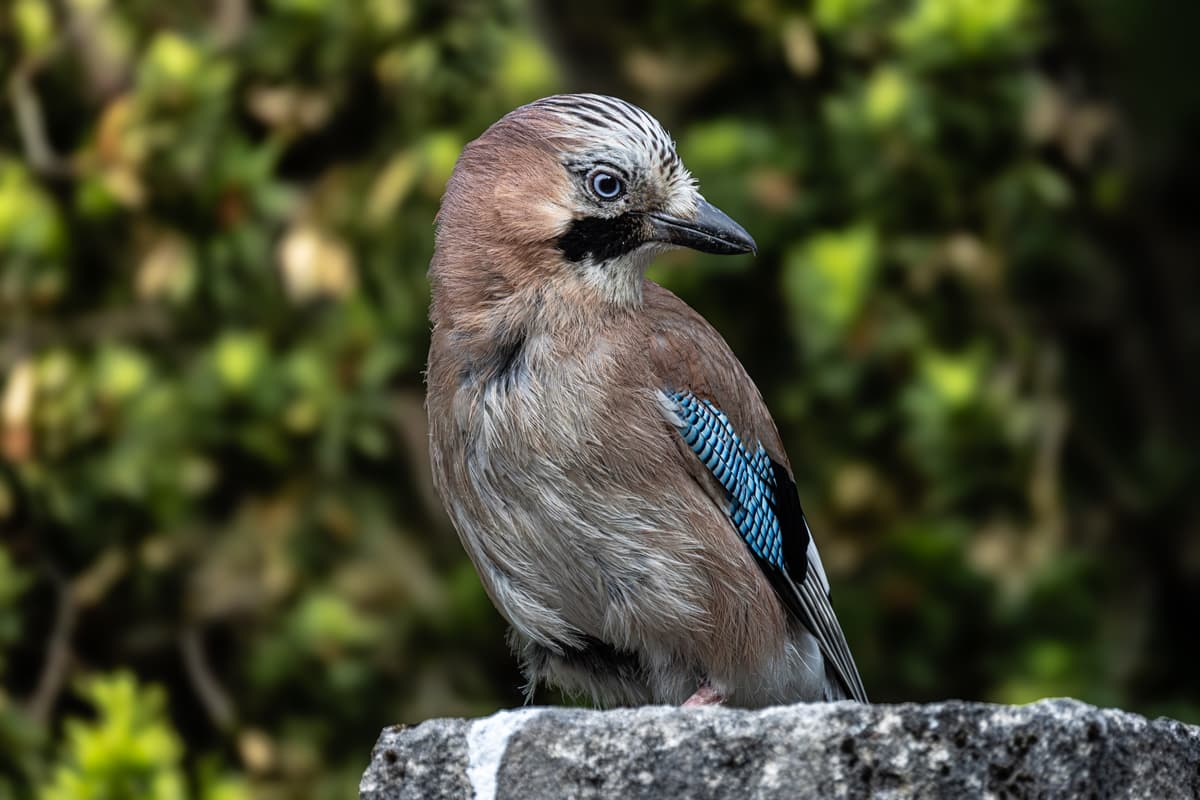
A Eurasian jay in Paris.
A trade handed over one person at a time
Audio-naturalism has never really been taught in a school. There is no diploma, no canon, no agreed reading list. It gets handed over, person to person, and the consequence is that most of its knowledge lives in the heads of about forty people in France and has never been written down anywhere a beginner could find it.
The recording usually cited as the first was made by Ludwig Koch in 1889, a white-rumped shama on an Edison wax cylinder. Koch was eight years old and the bird was in a cage, which is a founding irony worth keeping: the discipline that now prides itself on going out and waiting began indoors, with a child and a captive animal. He spent the rest of his life, much of it in Britain after fleeing Germany, persuading a general public that a bird was worth sitting still for. Early in the twentieth century, with royal backing, British schools were sent records of birds and natural ambiences to be played to children. The idea that you might train attention rather than merely inform it is a hundred years old and keeps being rediscovered as an innovation.
Jean-Claude Roche, who died in April 2025, built an enormous French catalogue from the late 1950s onward, and it is worth saying plainly that he did not record all of it himself. Collaborators and trainees were sent around the world. What was his was the direction, the selection, the editing, the publishing. A sound collection is authored the way a film is authored, and pretending otherwise has done the field no favours.
Knud Viktor, a Danish painter, moved into a ruined sheepfold in the Luberon in the 1960s and stayed. He called himself a painter of sounds. He modified his own equipment to make it more sensitive than anything he could buy, listened to a single valley for decades, and left one of the first European corpora, most of it still barely documented. He is the patron saint of doing this without permission from an institution.
Fernand Deroussen gave his sound library to the national natural history museum from 2005 onward, more than thirty thousand recordings, rather than sell it. Marc Namblard shared the 2026 Cesar for best sound with three colleagues, for Vincent Munier's Le Chant des forets, a film that also took best documentary and is made almost entirely of woodland.
What they share is a discipline that reads as trivial when you write it out and is not: go back to the same place, stay longer than is reasonable, and write everything down. Date, hour, exact location, weather, gear, what the animal was doing. An undated recording is a nice sound. A dated and located one is a document. Everything I am going to say about instruments is downstream of that sentence.
Three ways to record an animal, which are three ethics
Here is the part nobody publishes, and it is the actual content of the trade.
There are three ways to get an animal onto a recording, and choosing between them is a moral decision before it is a technical one.
The progressive approach
You have heard something and you move toward it. The rule is stages of no more than five metres, with a safety recording made from far away first, so that if the animal leaves you still have something. What you are watching for is not the animal's position but its attention: ears going up, the head turning, the rhythm of a song changing, a chorus of frogs going silent. If the animal alters its behaviour, you were already too close a moment ago.
Forest birds are far warier than urban ones, which is a fact with a whole essay inside it. Amphibians and singing insects feel you through the ground before they see you, so you never walk to the edge of a pond: you set up at a distance, retreat five or ten metres, and wait for the chorus to rebuild. Mammals barely care about colour and care enormously about vibration. And camouflage is not about matching a colour, it is about removing contrast, the hard edges of a human shape against the light.
© Thibault Noirot
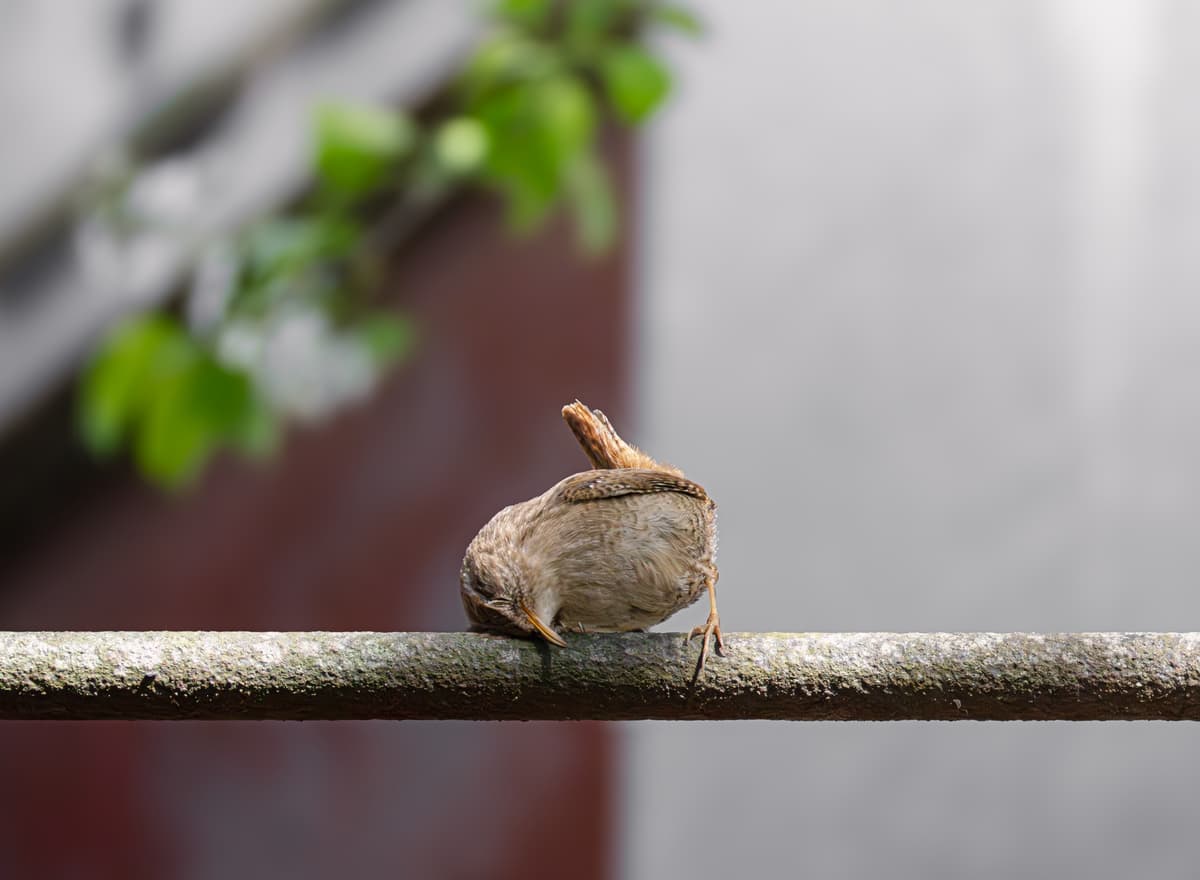
A wren in Paris.
The fixed hide
You stop trying to approach and you get there first. Hours early, sometimes half a day, and then you do not move. The tent is optional. The stillness is not. The reference case is the capercaillie, a bird in steep decline in France, whose spring display grounds you enter no later than mid afternoon and leave the following morning, because the birds roost in the trees directly above the hides and any movement in the night ruins the thing you came for and harms the animal besides. If waiting is painful for you, this method is not a challenge to overcome, it is simply not yours.
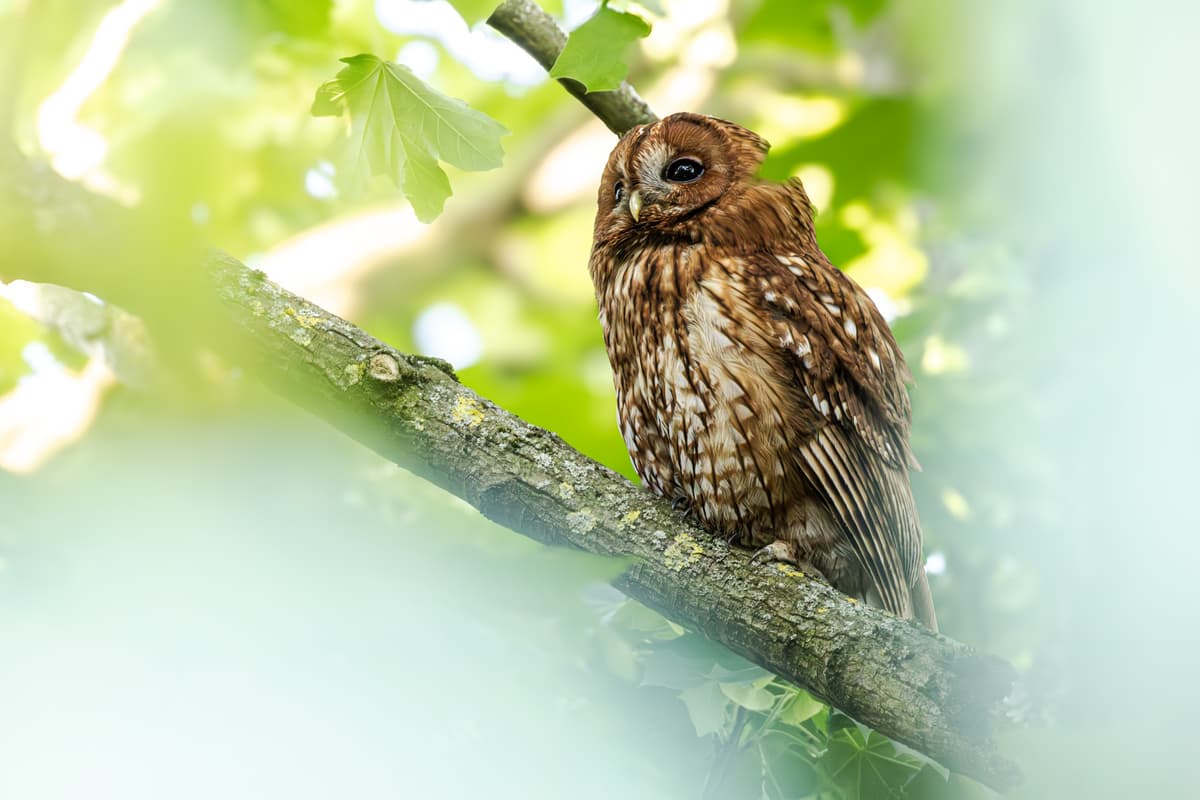
© Thibault Noirot
A tawny owl in Paris.
The sound trap
You leave a machine and you go home. It records for hours or weeks, protected, oriented, camouflaged. This is how I got a red fox passing a few metres from a recorder I had left by an olive tree in Provence, at twenty past five in the morning.
© Thibault Noirot
Red fox passing a recorder. Mira Luna, Provence, 6 August 2026.
Each method removes a different amount of you from the scene. The approach puts your body inside the animal's decision. The hide removes your movement but not your presence, and the animal often knows. The trap removes you completely, and that is exactly what makes it strange rather than comfortable. Nobody was there. There is a particular vertigo in discovering at breakfast, on headphones, that a place you thought you knew has another life that does not involve you at all.
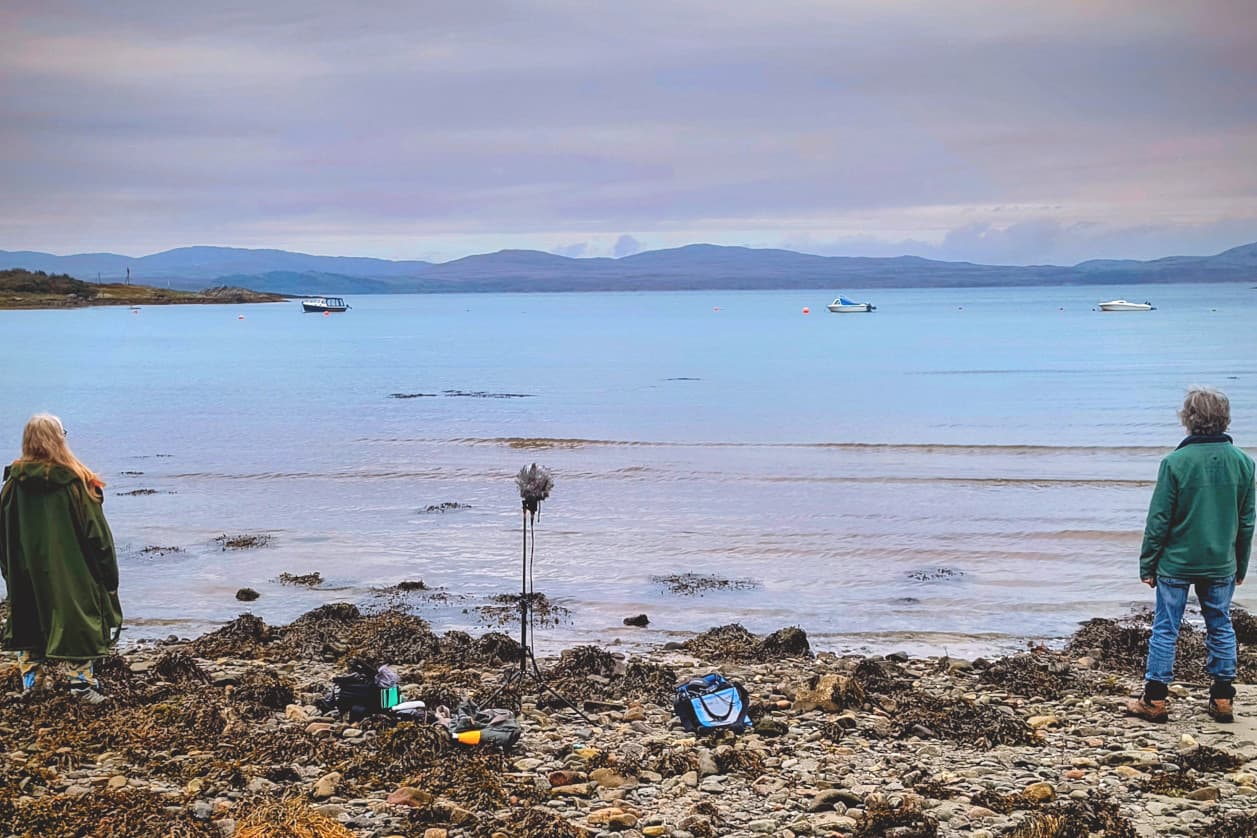
The craft around the trap is entirely unglamorous. Never put the recorder on the ground: soil transmits vibration, insects arrive, ants get inside and leave formic acid in the circuits. Put it up, on a tripod, in vegetation or against a bush, which also raises the chance a bird comes close, because there is less of you to read. In rain, string a cloth above the microphones and break the impact of the drops with a few branches, without pulling it tight. Check the take on headphones before you leave the site, because a battery that died at hour two is a discovery you want to make while you can still fix it.
The instrument is already an opinion
Audio-naturalists talk about gear the way cooks talk about knives, and outsiders assume it is fetishism. It is not. The equipment decides what can be heard before you make a single artistic choice, and the cleanest demonstration is the parabola.
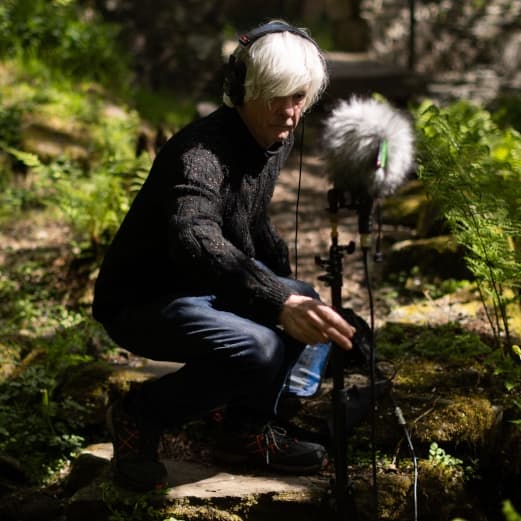
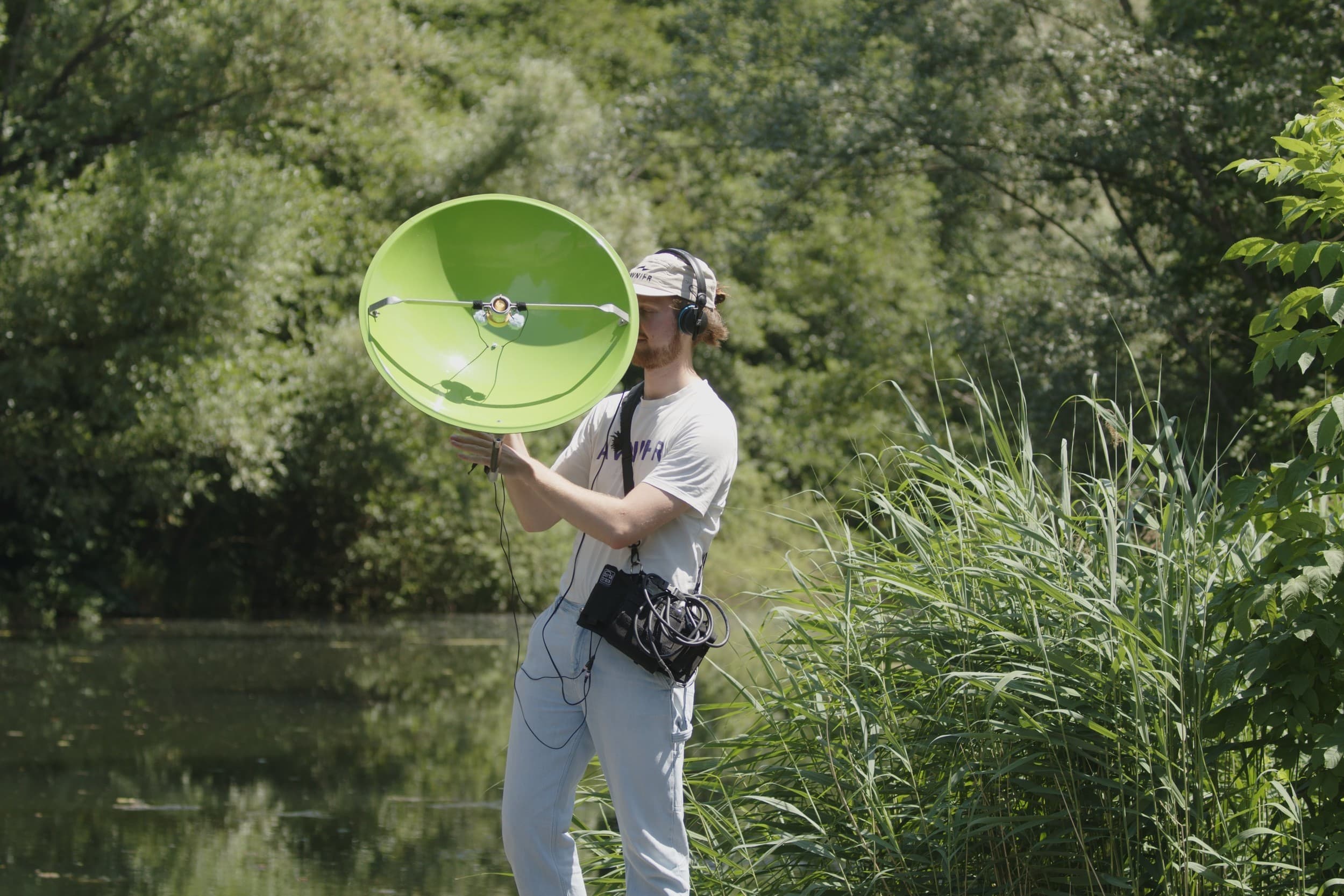
A parabolic reflector concentrates waves arriving along its axis onto a focal point, the way a mirror does with light. Put a small omnidirectional capsule at that focus and a bird forty metres up sounds like it is at your shoulder. Most of the birds worth recording will not tolerate you at conversational distance, so the dish is how a great deal of the recorded natural world got recorded.
But a dish only focuses wavelengths shorter than its own diameter. The order of magnitude is the speed of sound divided by that diameter, so a fifty centimetre reflector begins to work somewhere around seven hundred hertz and does essentially nothing below. The low end is not focused. It arrives diffuse, from everywhere, unamplified.
Read that as an aesthetic fact rather than a specification. The parabola does not bring you closer to the bird. It builds a bird that is close in the mids and highs while the world stays far away in the lows. No listener has ever stood inside that sound, because it does not exist in the world. It is a composite, and it is one of the most recognisable signatures in the history of nature recording. Decades of records described as intimate and faithful are records of an object the ear could not have made on its own.
The same logic runs down the whole chain. A cardioid at the focus of a dish is worse than an omni, because its lobe rejects part of the reflected field and it is a pressure gradient design, so wind hits it harder and its body shadows the focus. A foam windscreen damps light gusts but transmits mechanical vibration straight into the capsule by contact, which is why a full basket and a fur cover beat foam by a distance. And wind itself is close to unrecordable: what you can capture is its effect on vegetation, on relief, on structures, never the moving air on the membrane.
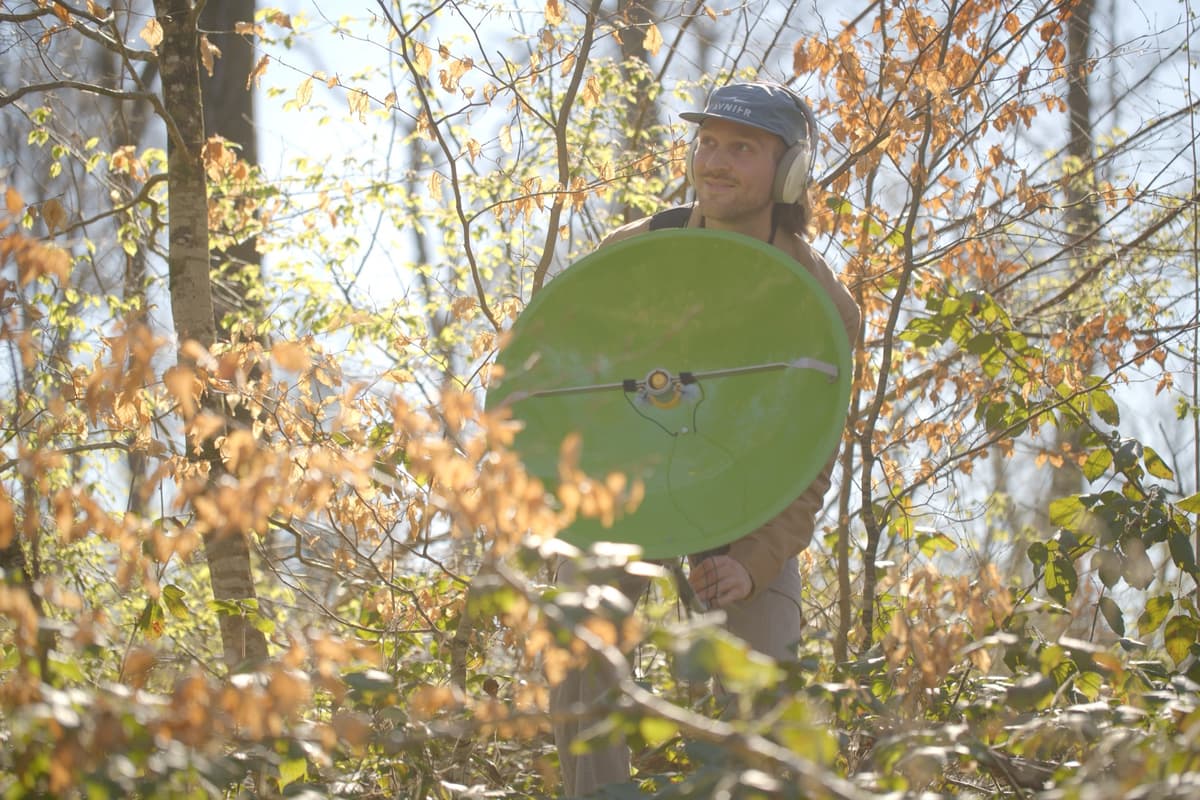
© Thibault Noirot
The parabolic reflector in use, in the undergrowth.
The disagreement at the centre
Which brings me to the one real argument inside this field, and I think it deserves to be better known outside it.
Gordon Hempton's position is that listening is a sensory experience rather than a technical reconstruction. The forest is already composed. Your job is to stand in it with enough humility to let it be what it is. Nature will never mix itself, so do not mix it either.
Marc Namblard's position is that there is always a degree of recomposition, even when it is implicit. You chose where to stand, which way the capsules faced, how far apart they sat, what hour you got out of bed. The take you bring home is not the forest. It is a decision about the forest, made mostly before you pressed record.
Everything I have described above says Namblard is right, and the parabola says it loudest. But the interesting part is that this is not a cynical position. It is the only one that permits honesty with a listener. Once you accept the frame is already a mix, you owe people an account of what your frame did. Hempton's ethic, which I admire, quietly asks you to hide the mixing by pretending there was none.
What the notebook is for
Because the frame is a decision, the metadata is not admin. It is the part of the work that survives.
The convention I was taught looks like this: date, hour, region, precise place, the nature of the sound, the setup, the take. Written into the filename, so that it cannot be separated from the audio by any future software. Three disks: one archive of originals, edited only once the sort is done, one working disk, one archive of projects. A folder tree by geography rather than by project, continent down to region down to session in chronological order, because in twenty years you will remember where you were long before you remember what you were making.
And take photographs of the places you record. That advice sounded like an afterthought when I first heard it, and it is the single thing I am most glad I started doing. A spectrogram tells you what the air did. A photograph tells you why you chose that spot, which is the information you will actually have lost.
What the new instruments change, and what they do not
My generation gets things the lineage did not have, and I want to be precise about their shape, because both available slogans are wrong.
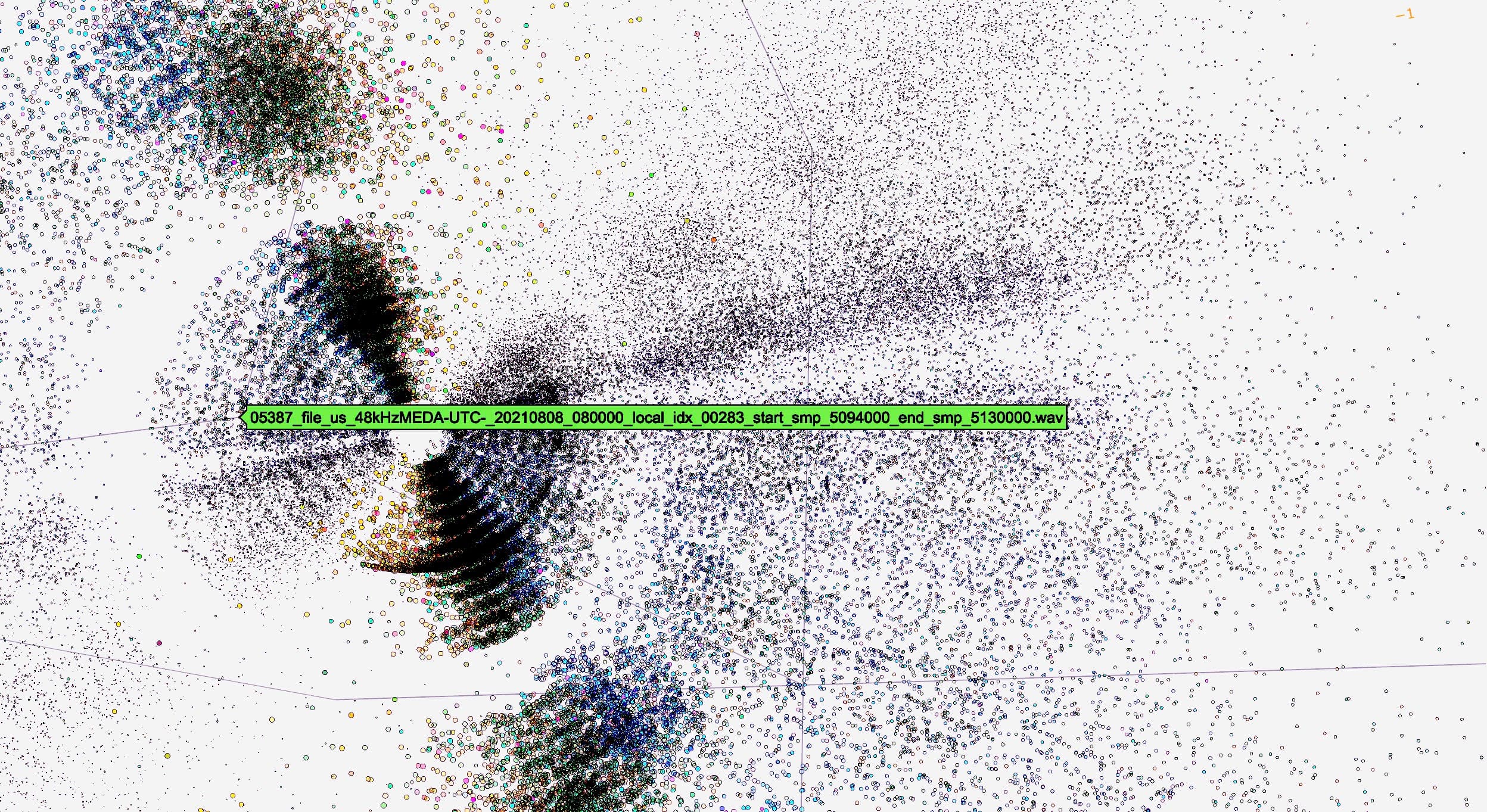
A night of passive recording is eight to ten hours of file. Nobody listens to that twice, so we run models over it. BirdNET, supervised, answers which species. Perch, self-supervised, answers which sound structure, independently of any label, which makes it better inside a personal corpus full of things the public datasets barely contain. Both are confident and both are frequently wrong. One of my nights came back with a great spotted woodpecker that turned out, on inspection, to be a fox scratching a stone slab: same rhythmic envelope, and the model has never been outside.
That error is more interesting than it looks, because the category it reached for has itself moved. Woodpecker drumming is communication, not feeding, and in a city the birds have migrated onto electrical poles, metal signs and gutters, because those supports are louder and carry further. It is the equivalent of raising your voice in a noisy room. So the model was listening for a forest sound that has already relocated onto metal, and it found a mammal on stone.
So the rule is dull and non-negotiable: a detection is a hypothesis until I have looked at the spectrogram and listened. The picture catches what the ear forgives and the ear catches what the picture flattens. These models do not replace listening and they are not merely a convenience. They are a prosthesis with a specific shape, excellent at finding the improbable event inside ten hours of nothing, poor at knowing what it found.
The same goes for ultrasound. Recording bats at 192 kHz gives me a band no ear reaches, and then forces a choice with a price attached: a heterodyne detector gives real time and destroys structure, time expansion gives structure and destroys tempo, analysis gives certainty and destroys the body. There is no neutral option, only three different recompositions, which is Namblard's argument arriving in a place where it cannot be avoided.
© Thibault Noirot
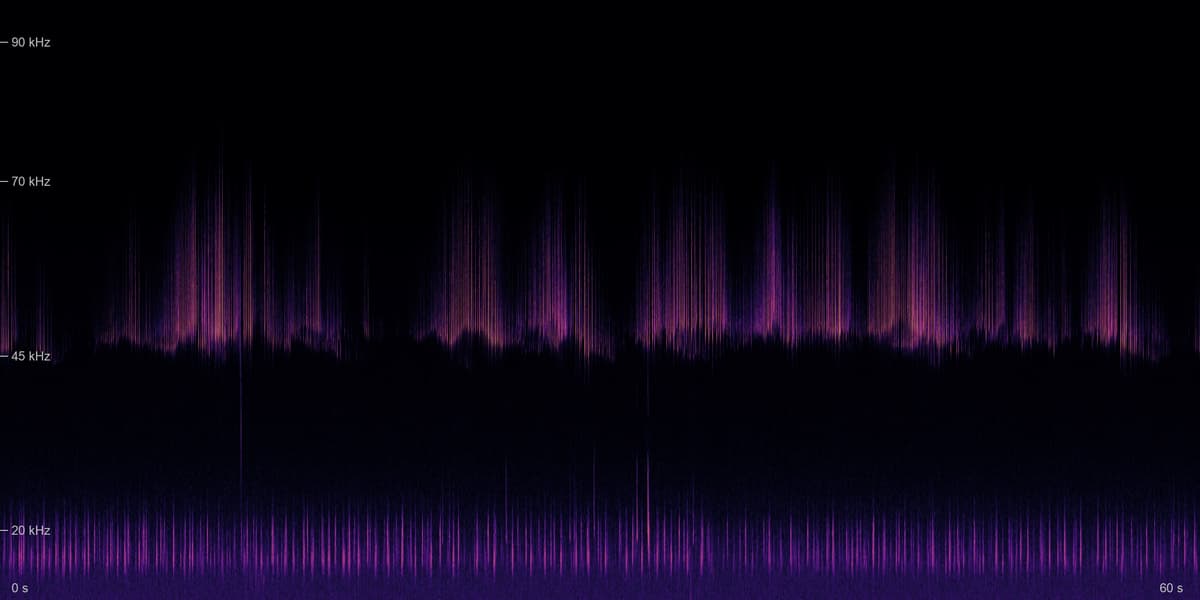
Bats at the entrance of Père-Lachaise, 12 August 2026, 21:32. Heterodyne tuning at 35, 45 and 55 kHz, three passes, one real minute, then the same minute slowed ten times.
© Thibault Noirot
Spectrogram of that minute. The calls sweep down to about 45 kHz; the pulses below 25 kHz are insects.
Two kinds of water
I will end on the thing that made me sure this is a trade worth defending.
I record trees from inside the trunk with contact microphones. What comes back is a water column rising, and the sharp snap when it breaks under tension. Plant physiologists count those cavitation events as a quantitative marker of drought stress. In 2023 the Hadany lab published, in Cell, evidence that stressed plants also emit airborne ultrasonic clicks, so the tree is not only audible from inside, it is broadcasting.
© Thibault Noirot
An old tree in the Haut-Doubs, France, recorded from inside the trunk with contact microphones. Image and sound come from the same take.
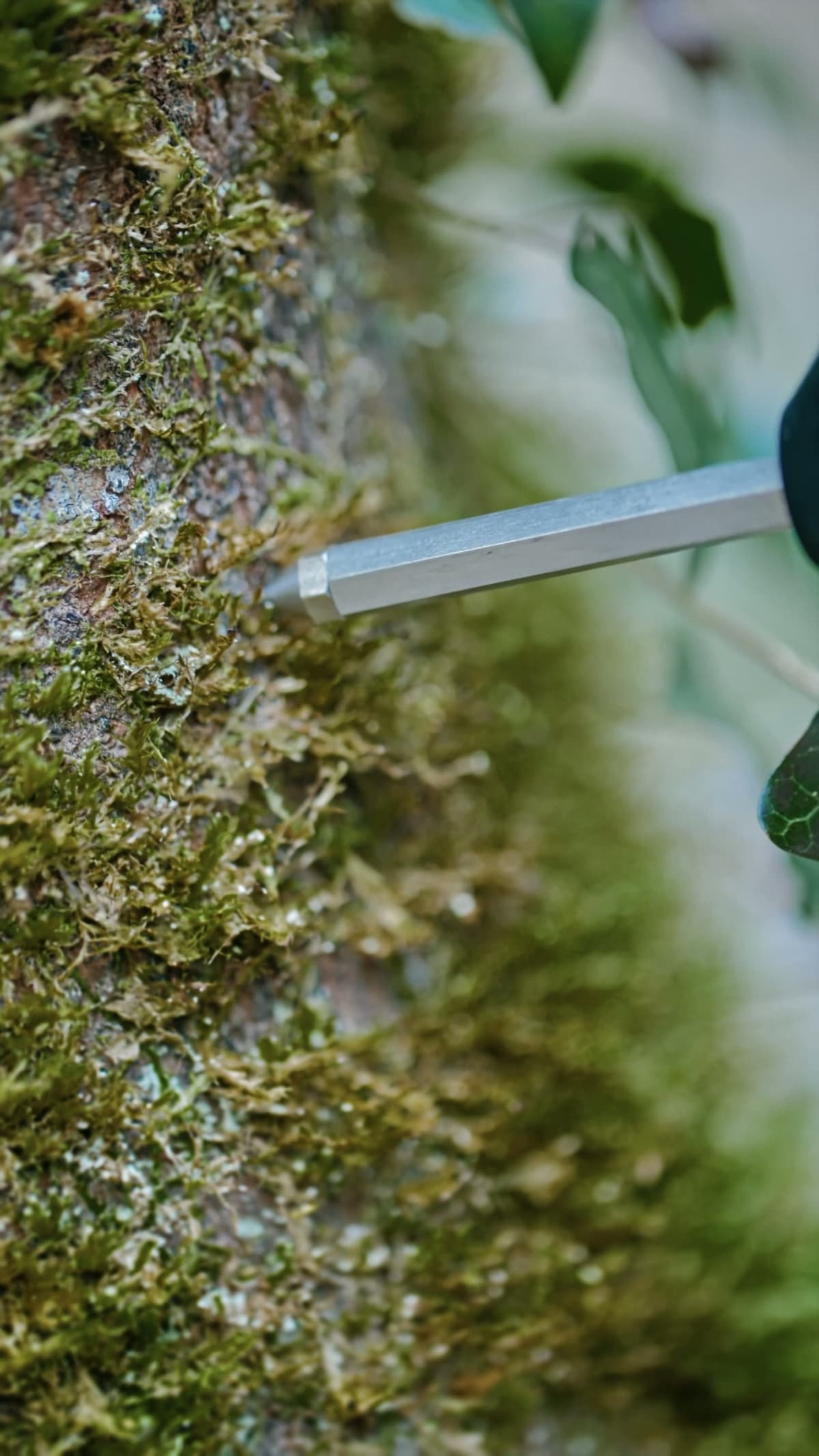
© Thibault Noirot
A contact microphone on the trunk of the old tree. Haut-Doubs, France.
There is a second water sound in the same dry landscape. In spring, near willows, when it has not rained for weeks, you can hear something faint and wet. It is a froghopper larva, which builds a foam around itself out of air, secretions and sap, the thing English calls cuckoo spit, and that foam keeps it dark and damp while everything else dries. When there is enough of it, it drips. A false rain, made by an insect, in the middle of a drought.
One of those is a system failing. The other is a system succeeding. They sound almost the same, and no instrument on earth will tell you which is which. You have to know the willow, the season, the weeks without rain, and be close and quiet and already listening.
That is audio-naturalism. Not the microphone, and not the model. The willingness to go out without knowing, often for nothing, and to be there when the difference shows up.