

Showing 12 of 16
Tools
Zirkonium
ZKM | Hertz-Lab
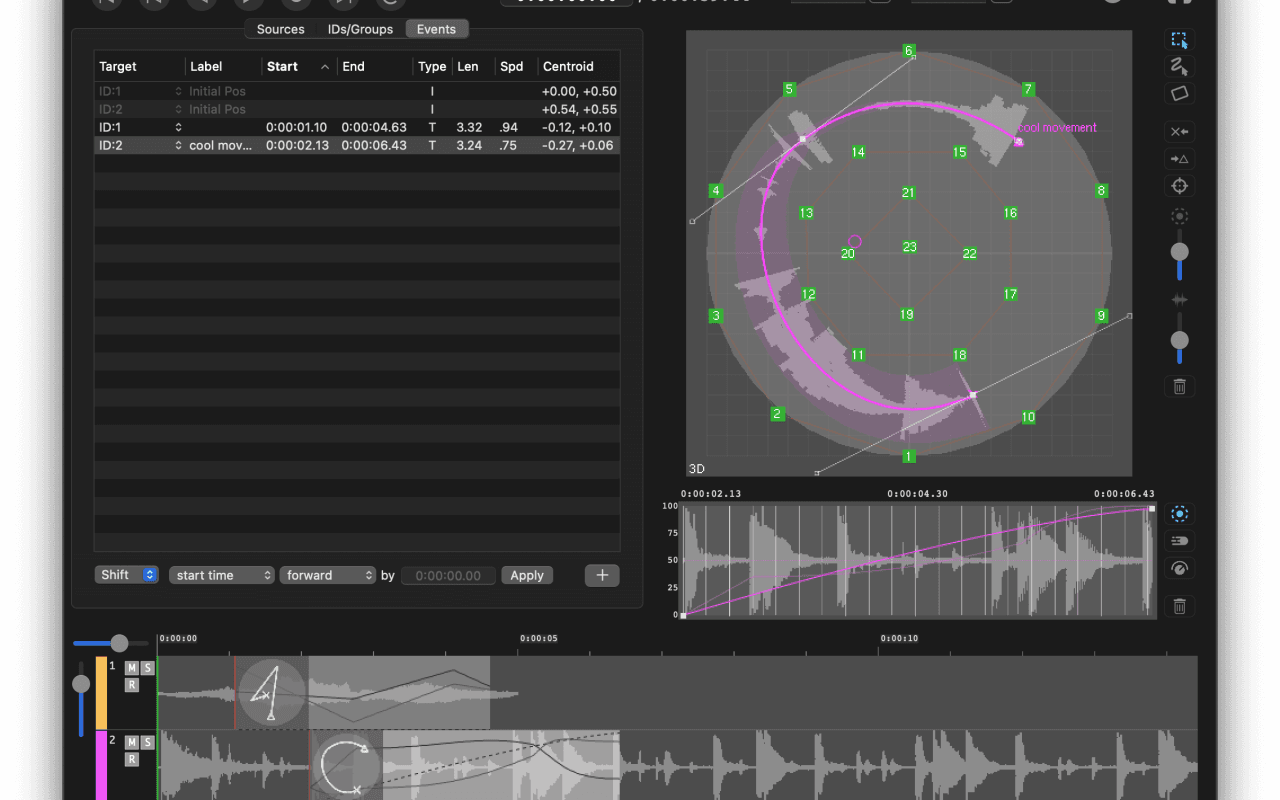
Zirkonium is a free macOS toolkit for spatial-audio composition and performance, developed at ZKM | Hertz-Lab Karlsruhe to drive the Klangdom — a 47-loudspeaker dome at the ZKM Kubus. Current version Zirkonium MK3 (since 2015) provides parametric trajectory creation over time, automatic interpolation, event filtering, and real-time rendering on arbitrary 2D or 3D loudspeaker setups. The DSP server is built on Pure Data (libpd) and uses VBAP, Higher-Order Ambisonics (HOA library, CICM), and binau
WFSCollider
Game Of Life Foundation
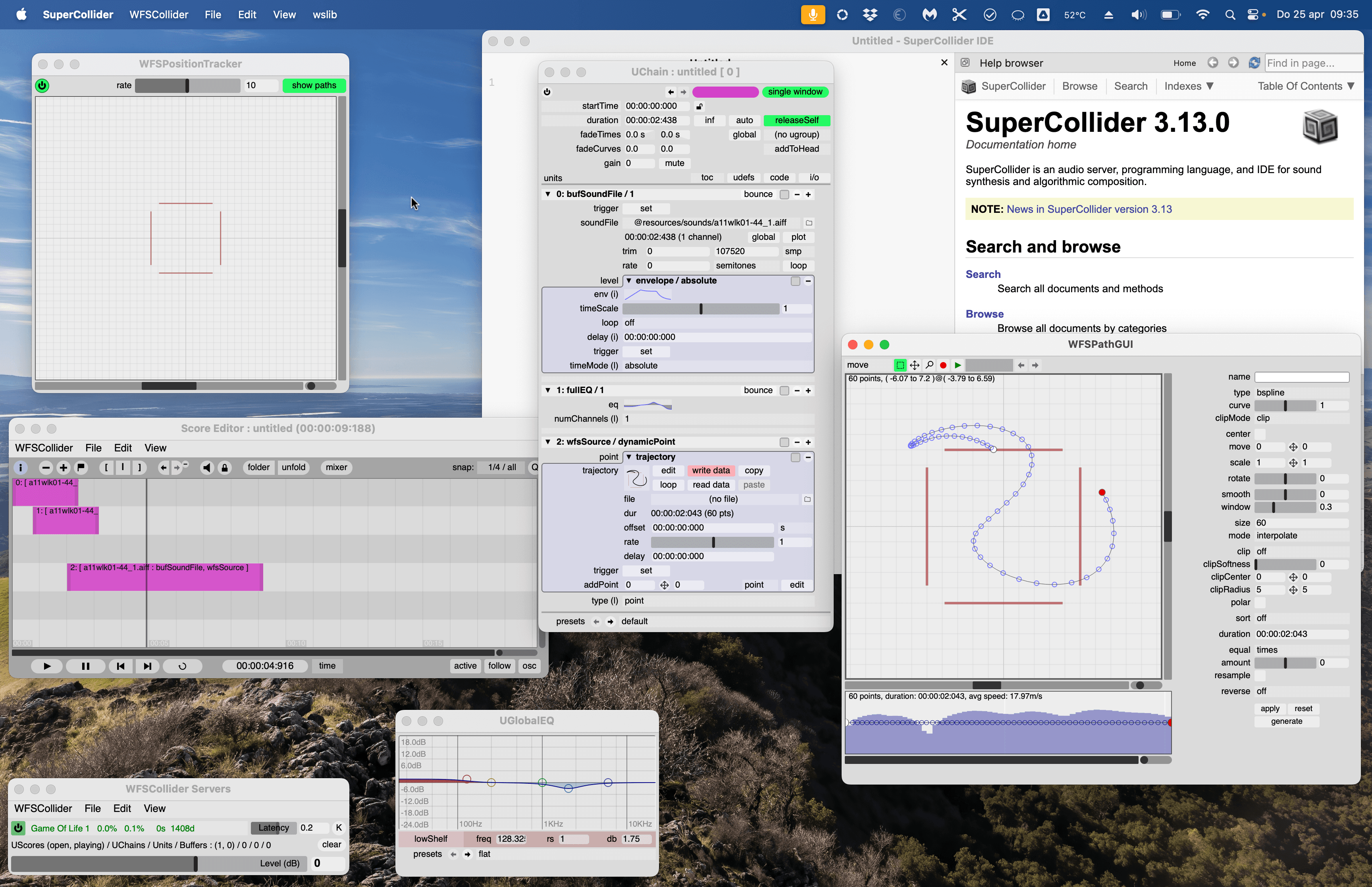
WFSCollider is a SuperCollider class library for Wave Field Synthesis spatialisation with a graphical timeline, trajectory editor, and modular Unit Library audio plug-in system. It supports point sources, plane waves, and per-speaker indexing, with sample-accurate scheduling across distributed servers, used in WFS composition and large-scale loudspeaker array performance.
TiMax SoundHub
Outboard
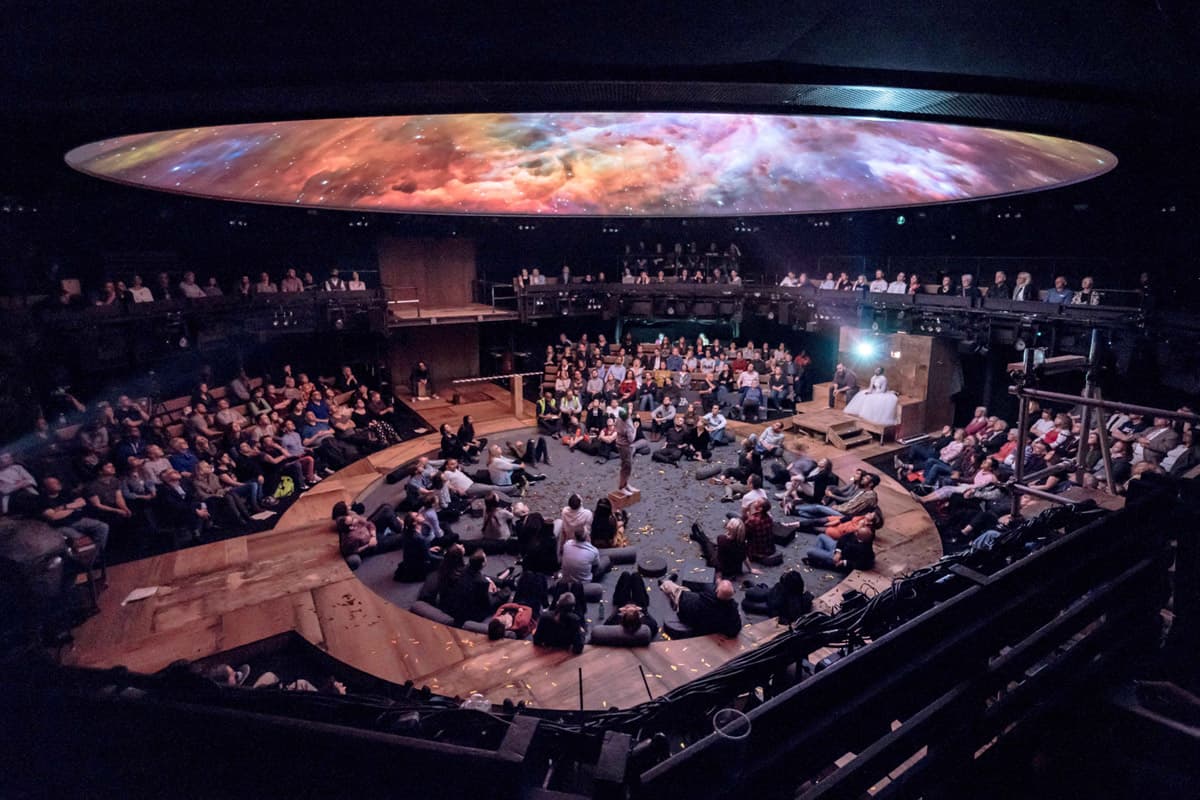
TiMax SoundHub is a commercial 2U hardware spatial audio processor with proprietary FPGA DSP for object-based, dynamic delay-matrix processing. It manages 32×32 or 64×64 channels with Dante or MADI I/O and runs shows autonomously without an attached computer; companion macOS/Windows software (PanSpace, Timeline, Mixer) provides spatial mapping, cue authoring, and show control. Used in theatre, opera, concerts, museums, theme parks, planetariums, and worship venues.
Spatial Audio Designer
New Audio Technology
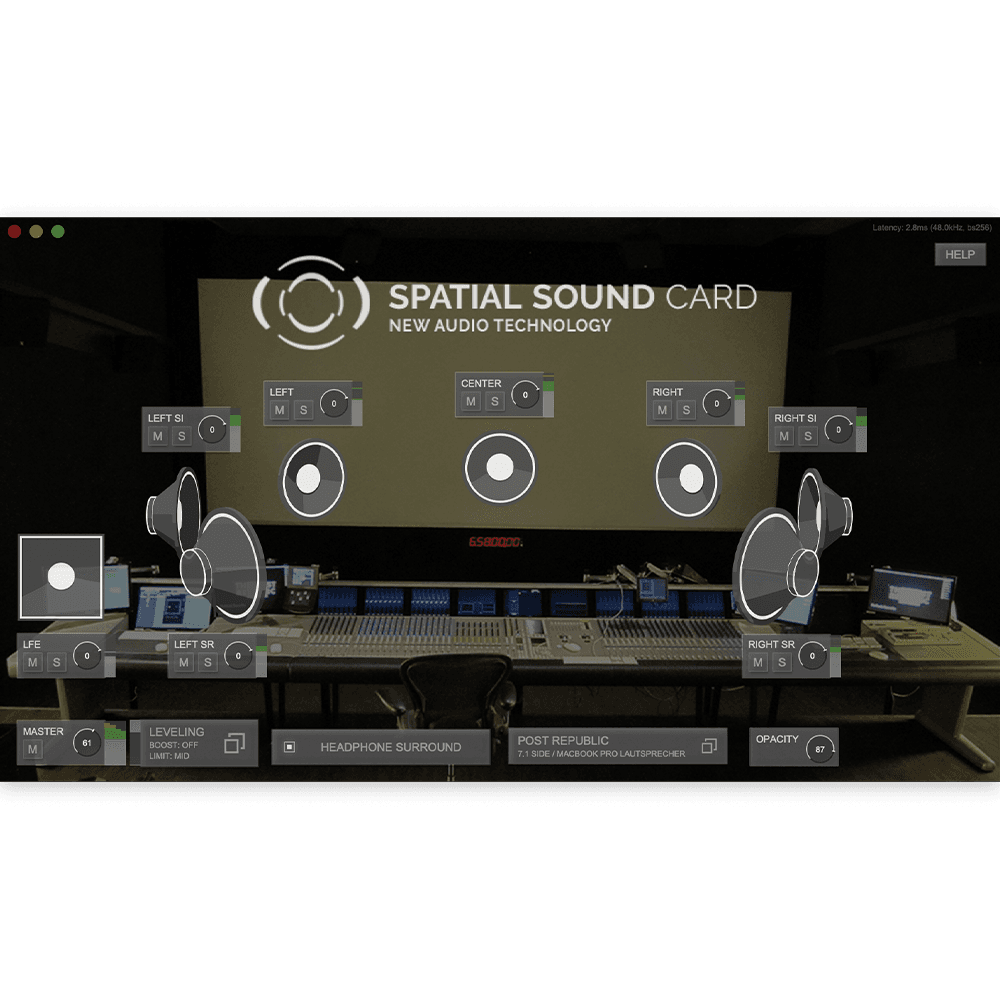
The Spatial Audio Designer (SAD) is a commercial plug-in suite for mixing and monitoring of 2D surround and 3D immersive audio formats (5.1 through 22.2, Dolby Atmos, Auro-3D, MPEG-H, IMAX 3D, DTS:X) in any DAW. It uses a virtual bus system independent of the host's channel limits and includes a Headphone Surround 3D speaker virtualisation for binaural monitoring, used in film, music, game audio, planetariums, and dome-projection contexts.
SpatGRIS
Groupe de Recherche en Immersion Spatiale (GRIS), Université de Montréal
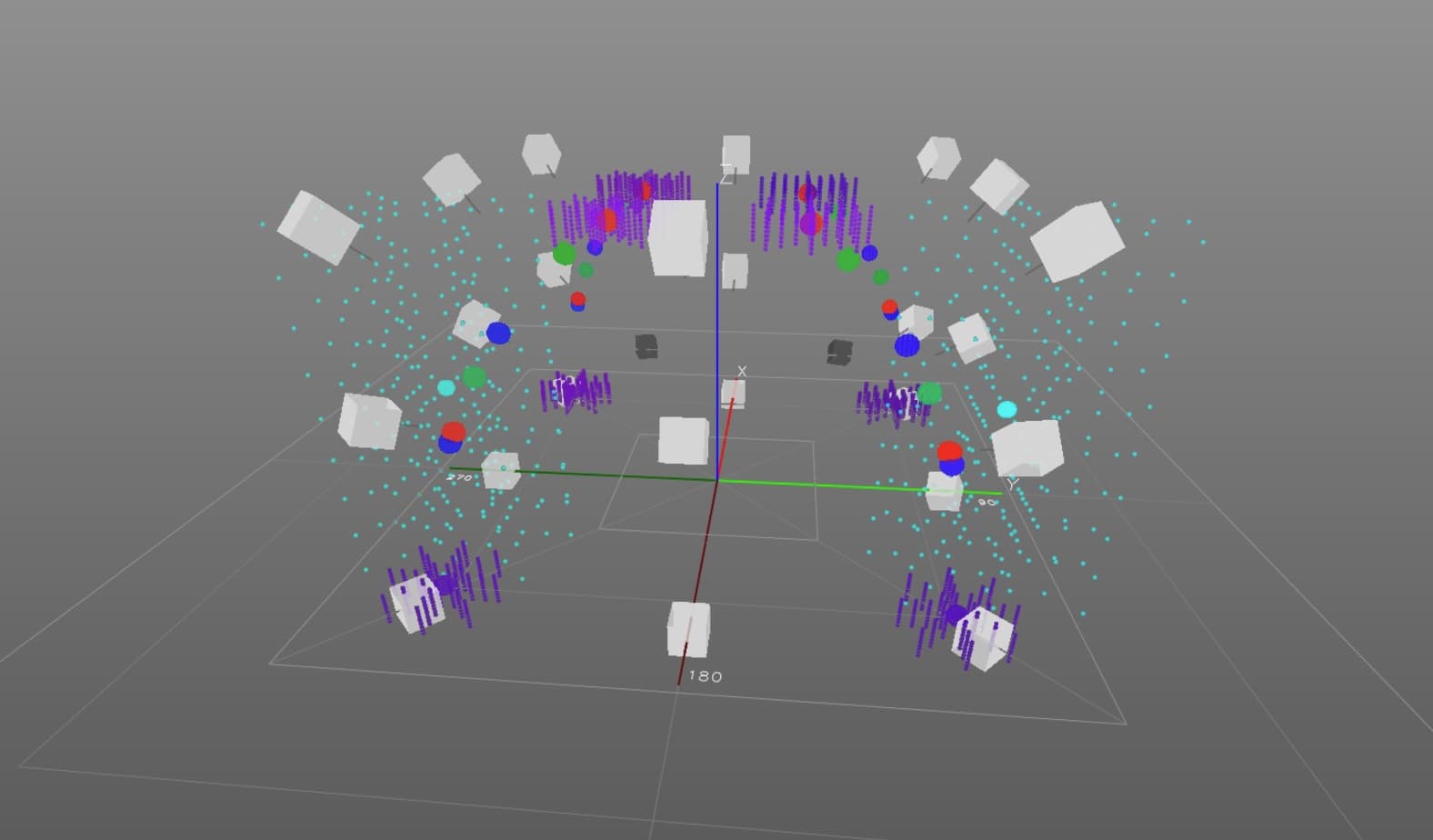
SpatGRIS is a free, open-source multichannel spatialisation server developed at Université de Montréal that supports up to 256 inputs and 256 outputs in five spatialisation modes: DOME (VBAP for speaker domes), CUBE (MBAP for non-dome layouts), HYBRID (mixed DOME / CUBE per source), BINAURAL (HRTF-based headphone monitoring), and STEREO. Distributed together with ControlGRIS — a companion plug-in (AAX / AU / VST3) that builds spatial trajectories inside the user's DAW and sends them to SpatGRIS
SPAT Revolution
FLUX:: Immersive
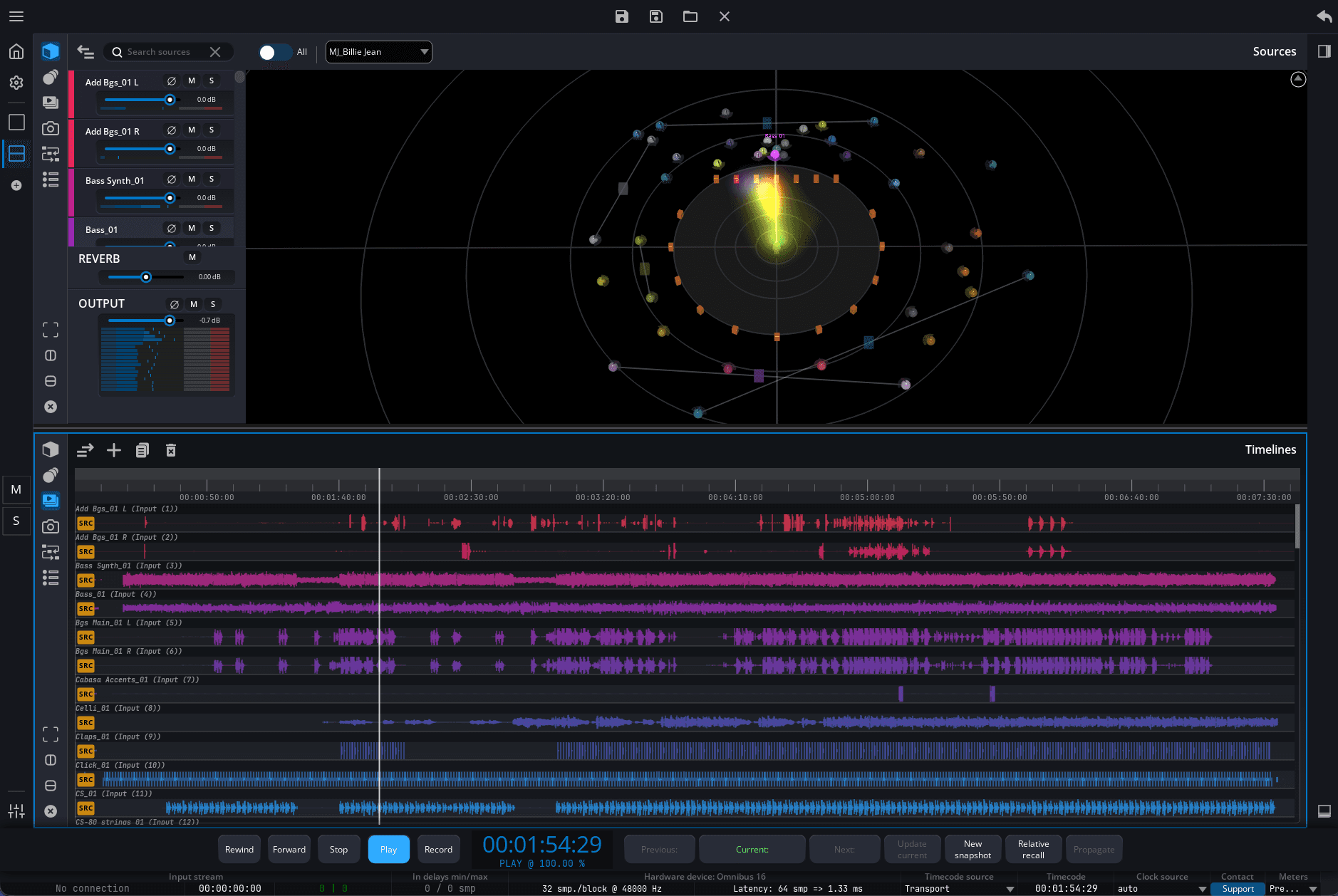
SPAT Revolution is a commercial real-time spatialisation engine for object-based and channel-based immersive audio production, supporting binaural, surround, Atmos-compatible, Ambisonic, VBAP, and Wave Field Synthesis (WFS) panning. It runs as a standalone application alongside any DAW via send/return/room plug-ins and OSC, used in studio post-production, live touring, theatre, museum and dome installations, and immersive research contexts.
Sound Particles
Sound Particles
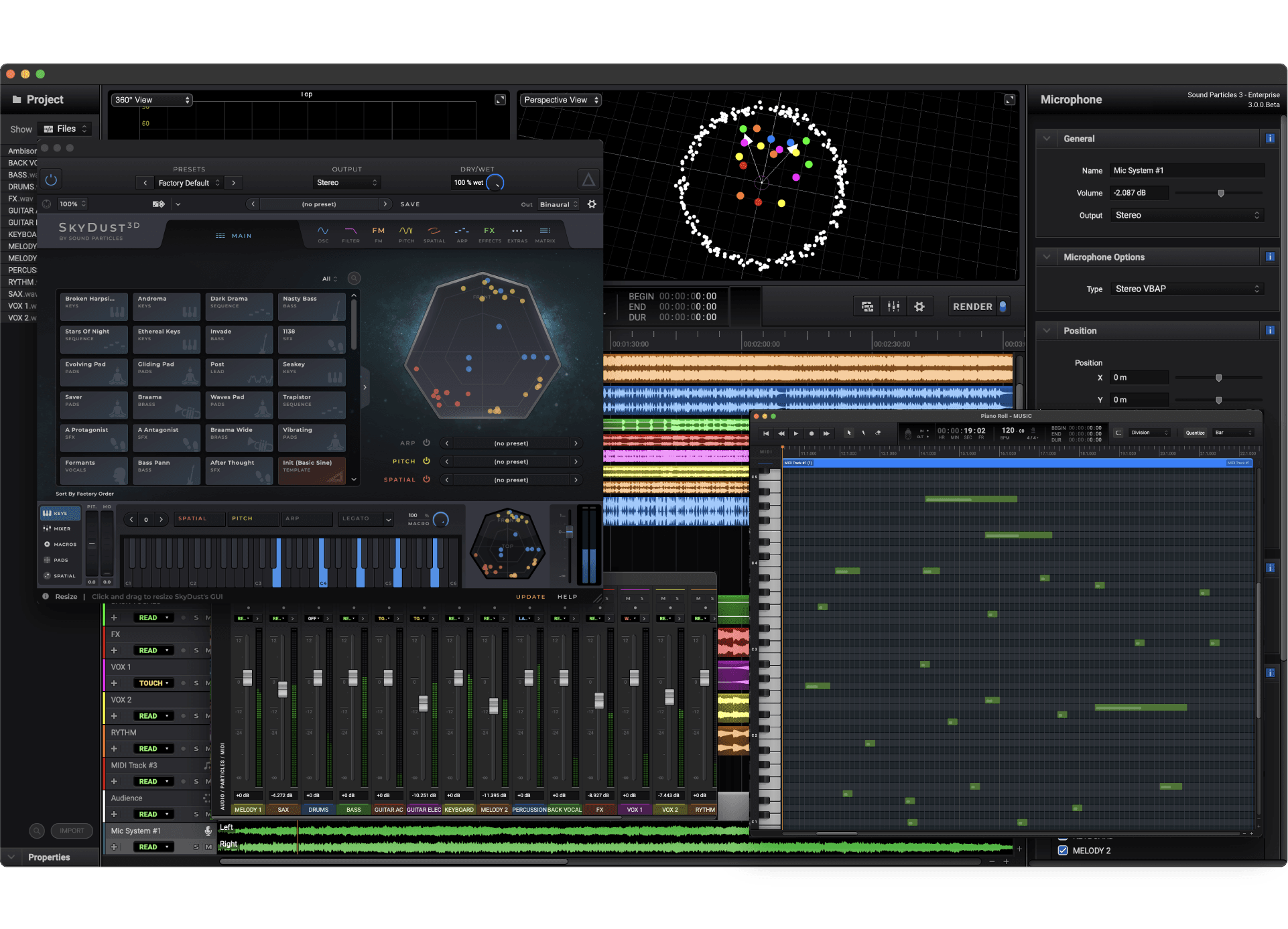
Sound Particles is a commercial standalone immersive audio workstation built around a 3D engine and a particle system — conceptually a CGI engine for sound. It generates large numbers of sound instances from a single sample, animates them in 3D space, and captures them with virtual microphones to render in stereo, binaural, surround, Ambisonics (up to 6th order), or Dolby Atmos ADM. Used widely in film, TV, game-audio, and immersive music for crowds, weather, atmospheres, and large-scale sound d
Pure Data
Pure Data community
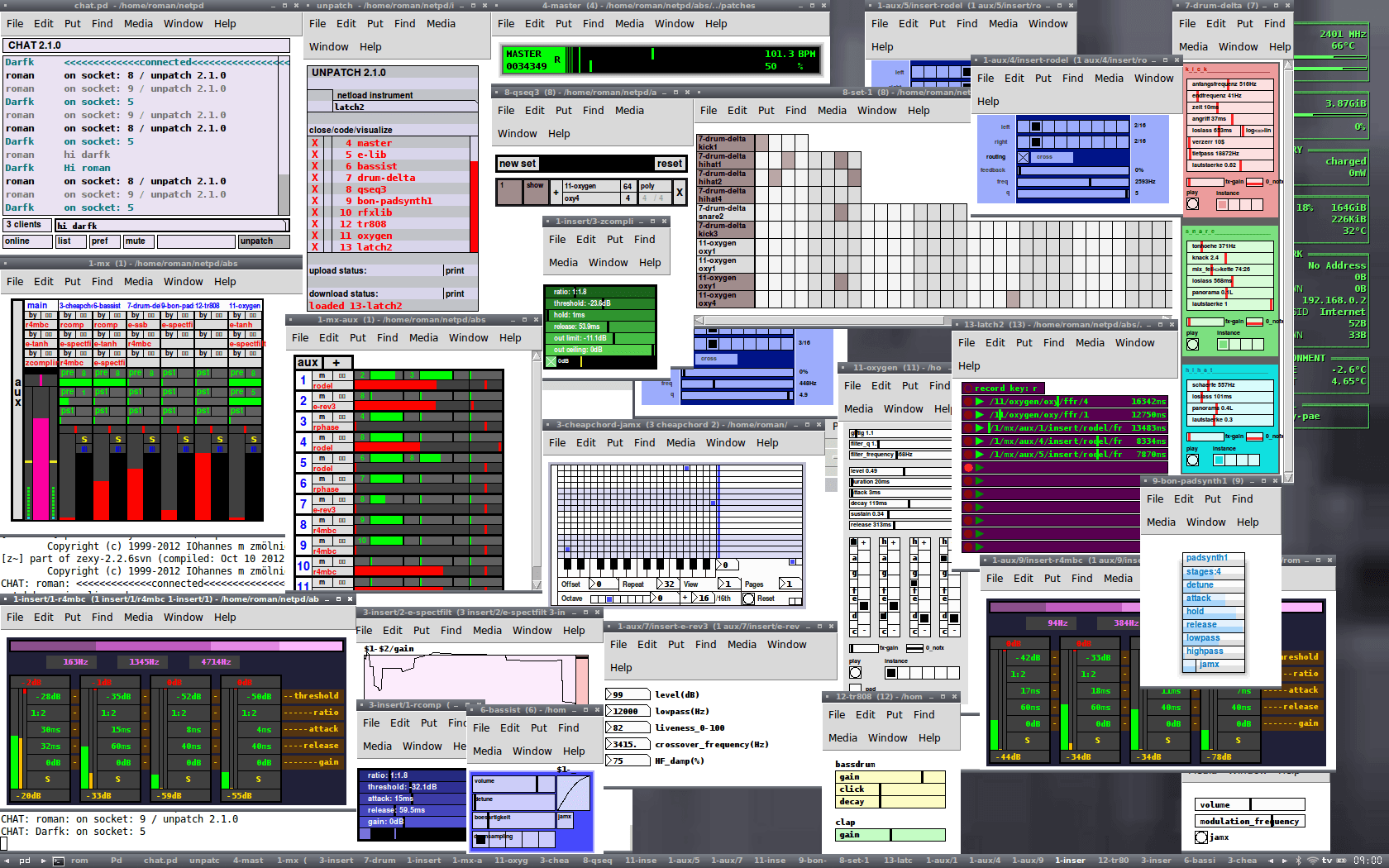
Pure Data (Pd) is an open-source visual data-flow programming environment for real-time audio, video, and graphics. Patches are built by connecting object boxes; the standard Pd-vanilla distribution provides core audio and MIDI processing, with extensions (cyclone, ELSE, GEM, IEM ambisonics) adding higher-level functionality. Widely used in academic research, sound installation, and live electroacoustic composition.
Max
Cycling '74
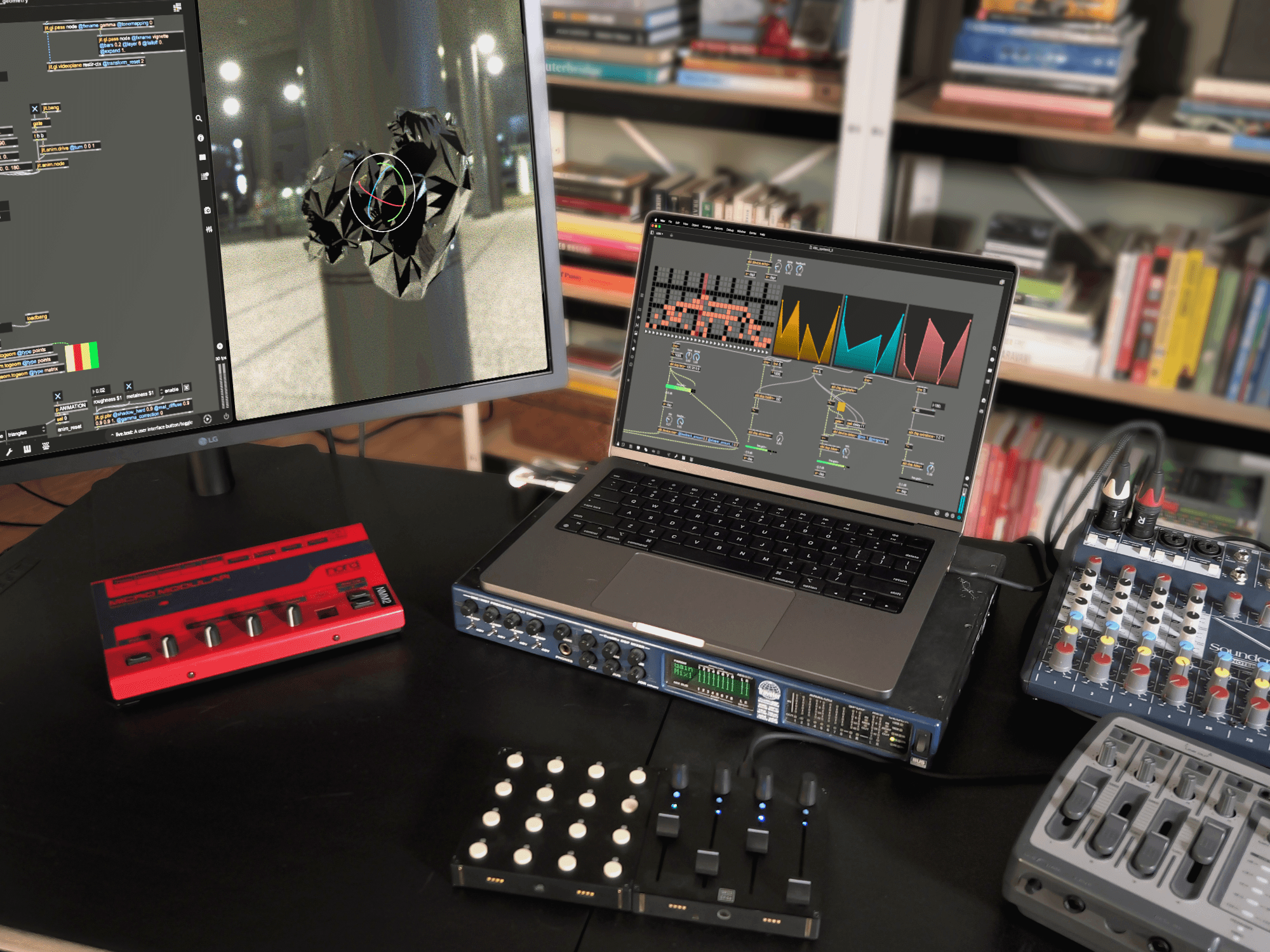
Max is a commercial visual programming environment for music, sound, graphics, and interactivity. Patches are built by connecting graphical objects on a canvas; the MSP layer provides real-time DSP, Jitter handles video and 3D graphics, and Gen enables low-level signal-rate code generation. Used widely in interactive sound installation, electroacoustic composition, and real-time spatial audio (often as host for the ICST Ambisonics Tools and similar externals).
L-ISA Studio
L-Acoustics
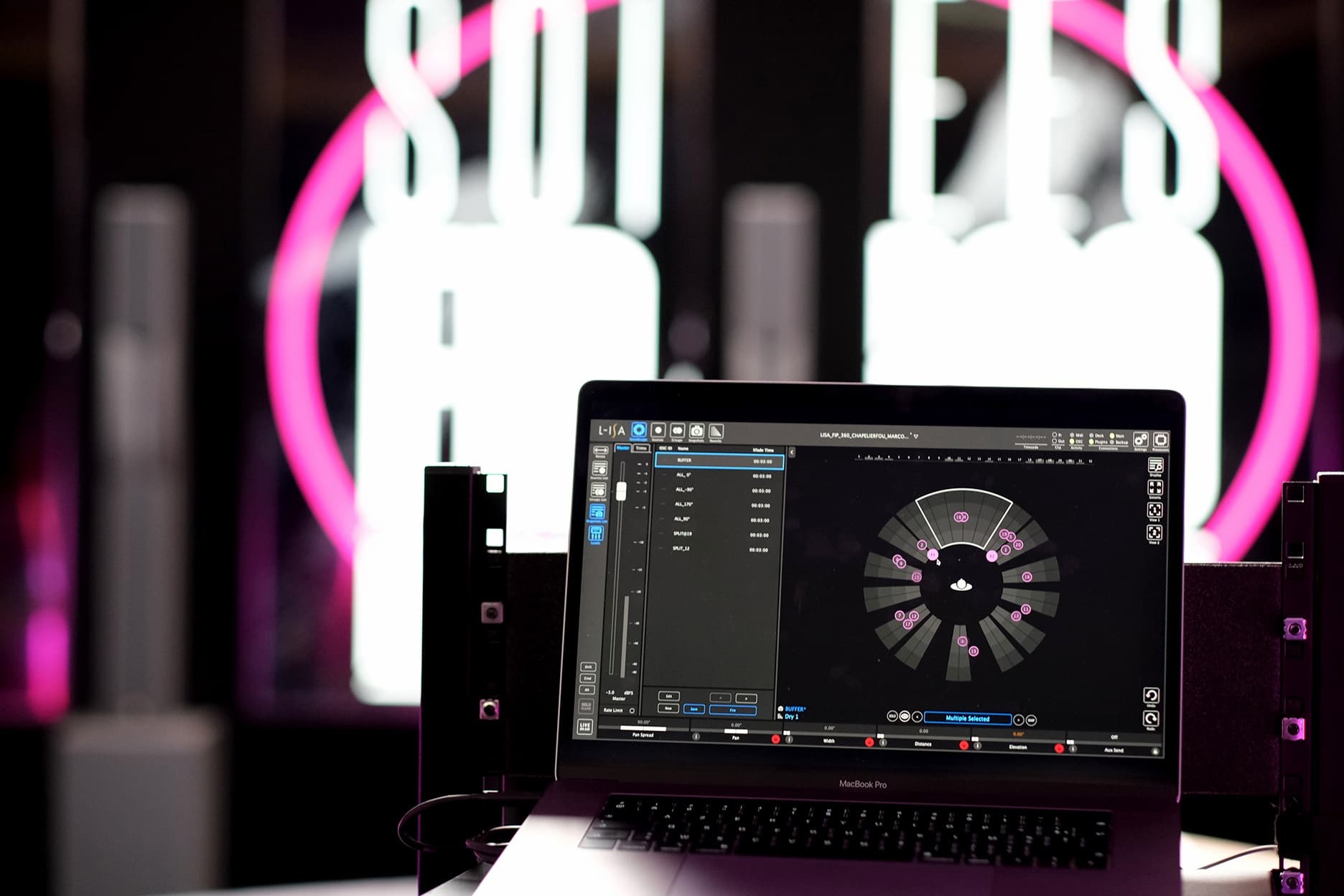
L-ISA Studio is a desktop spatialisation application for object-based immersive audio mixing, comprising the L-ISA Controller (touch-friendly UI), the L-ISA Processor Desktop (spatial and room engine), and the L-ISA Audio Bridge (virtual sound card). It supports up to 96 audio objects routed to up to 16 outputs in formats from 5.1 through 9.1.6 and 16.0, plus binaural with head-tracking, used in live touring, theatre, music production, and installation contexts compatible with the L-Acoustics L-
ICST Ambisonics Plugins
ICST, Zurich University of the Arts
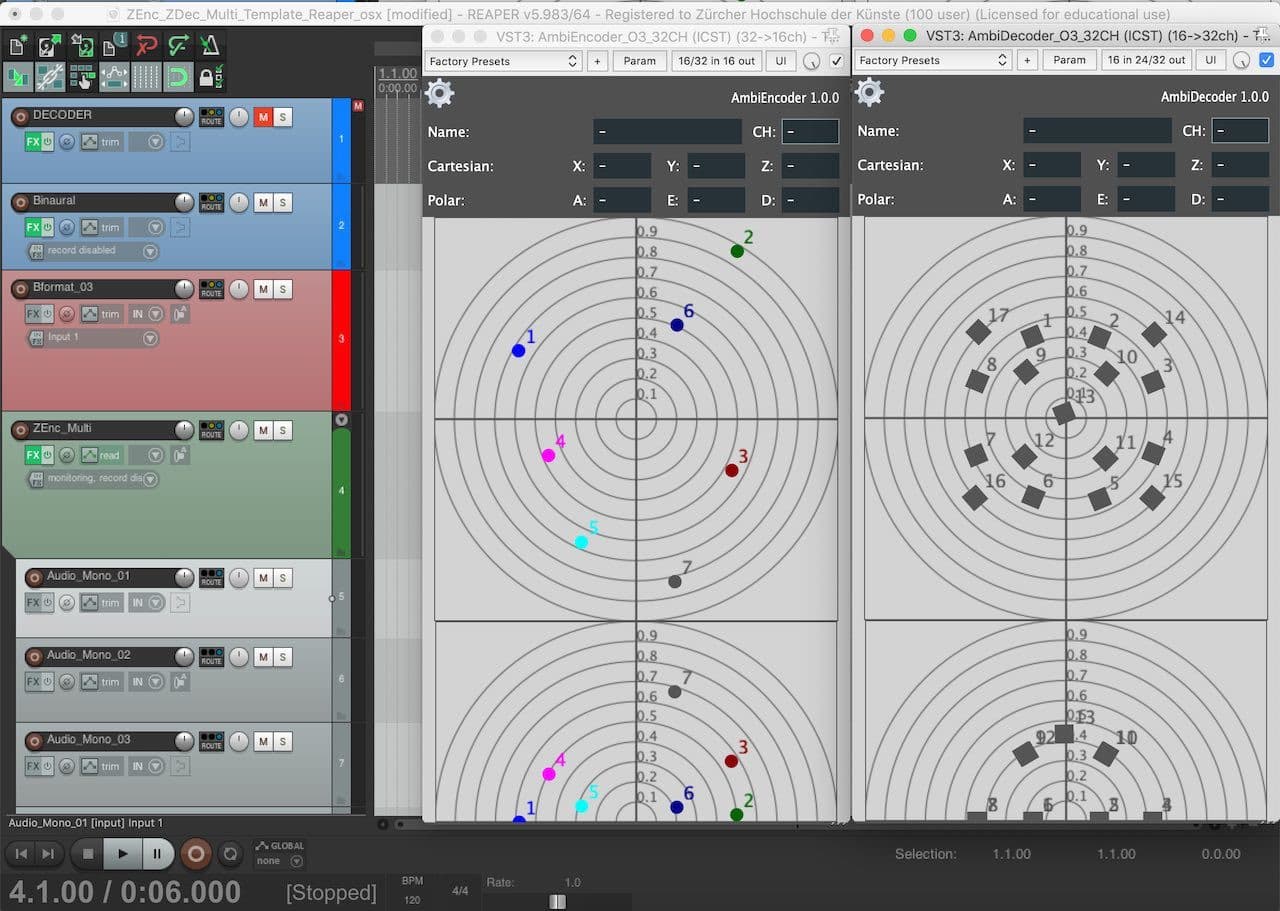
The ICST Ambisonics Plugins are a free open-source plug-in suite for higher-order Ambisonic production up to 7th order in REAPER, comprising encoder, decoder, multi-decoder, monitor, and animator. They support up to 64 audio sources and 64 loudspeakers with an interactive radar view, source grouping, distance encoding with Doppler effect, and OSC-based control with optional JavaScript pre-processing, used in spatial composition, multichannel sound installation, and acousmatic concert contexts.
Holophonix
Amadeus
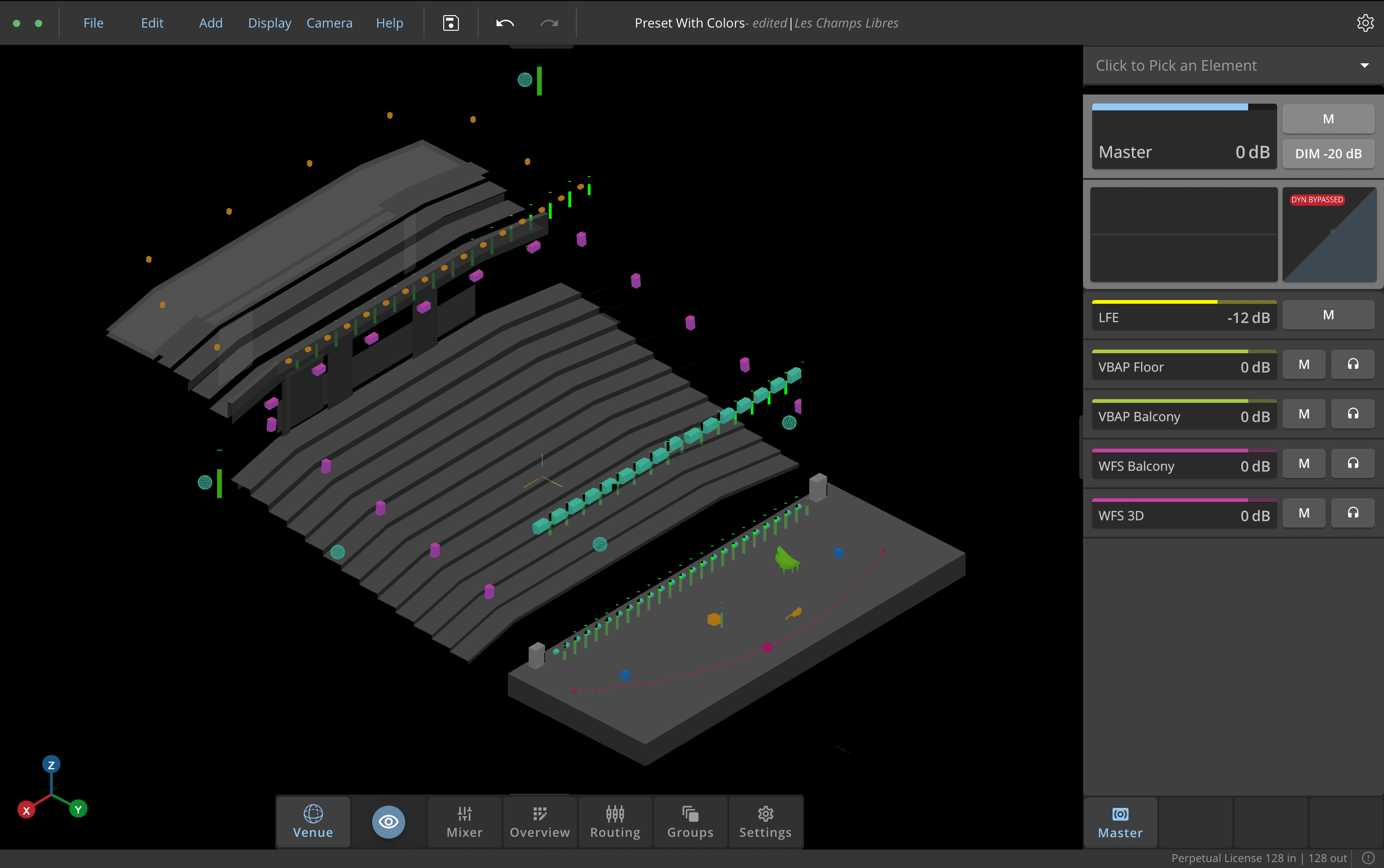
Holophonix is an immersive sound processor for live spatialisation, available as a hardware processor (up to 512 I/O on the Ultra model) and as Holophonix Native for macOS. It implements 13 spatialisation algorithms including Higher Order Ambisonics, Wave Field Synthesis, VBAP, VBIP, k-Nearest Neighbor, and Binaural, used in theatre, concert, museum, and broadcast contexts.